

How a Satirical Online Trend Became the Voice of Frustrated Youth
Special Report | New Delhi
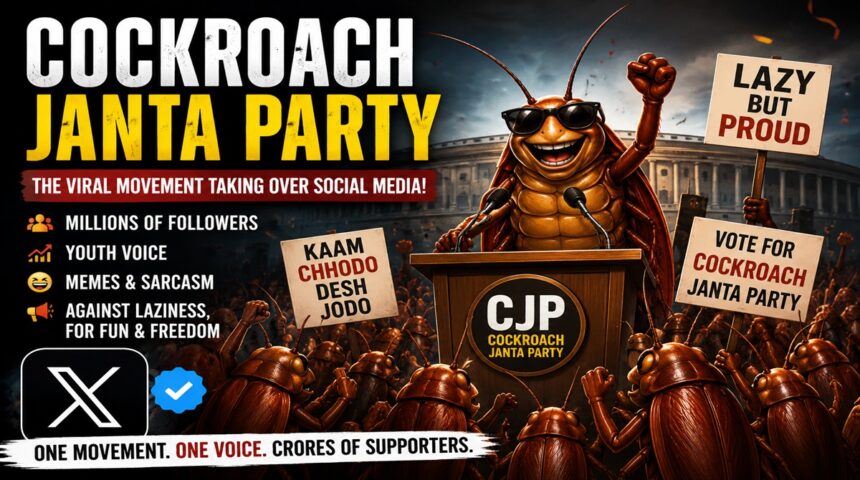
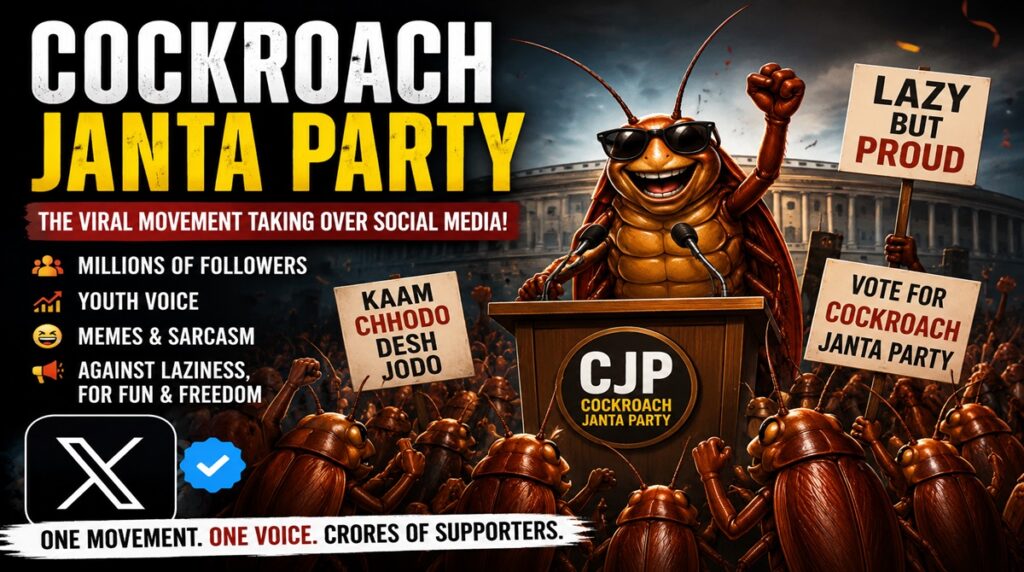
In recent weeks, a new name has rapidly gone viral across Indian social media platforms — Cockroach Janta Party (CJP). What initially appeared to be just another meme trend or satirical online campaign has quickly transformed into one of the most talked-about digital youth movements in India.
Platforms such as Instagram, X (formerly Twitter), Reddit, and YouTube have been flooded with CJP-related memes, videos, protest posts, and political satire. Within a short period, the movement reportedly gained millions of followers and began attracting attention from students, young professionals, influencers, and even political commentators.
Although CJP is not officially recognized as a political party, its online influence has become impossible to ignore.
What Is Cockroach Janta Party?
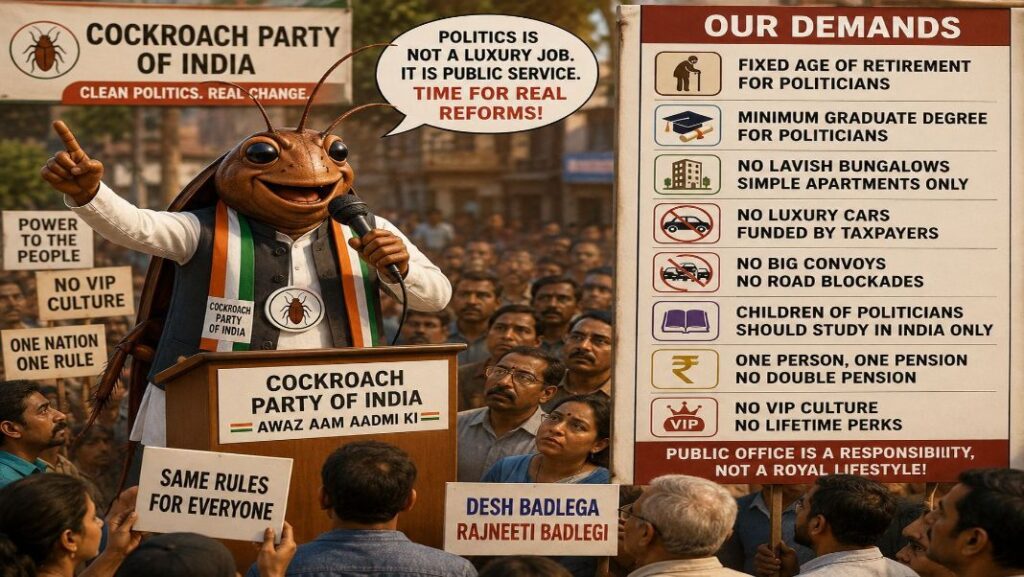
Cockroach Janta Party, popularly known as CJP, is essentially an online satirical movement created by young Indians frustrated with issues such as:
- Unemployment
- Corruption
- Examination scams
- Rising living costs
- Political disappointment
- And social inequality
The movement was reportedly started by content creator and student Abhijeet Dipke as a form of political satire and social commentary.
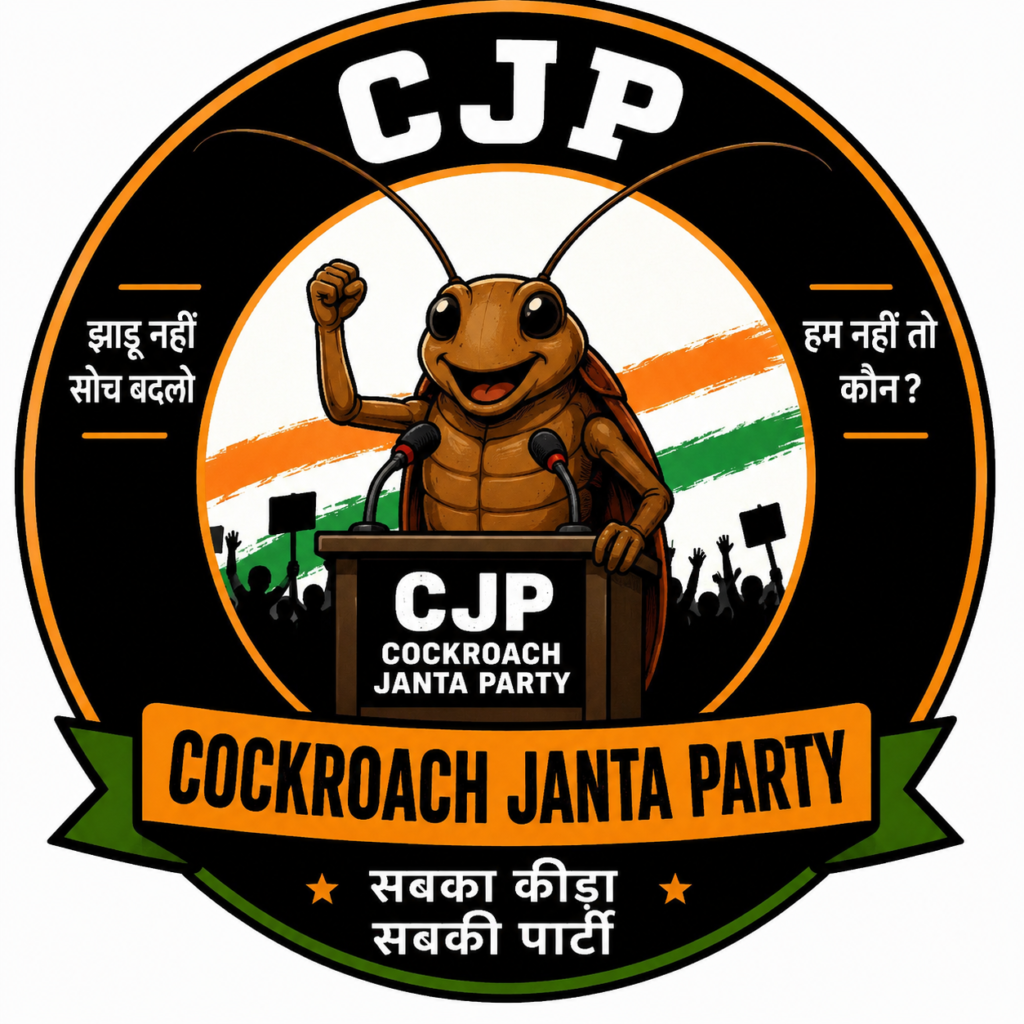
The “cockroach” symbol was chosen deliberately.
According to supporters, the cockroach represents:
- Survival during difficult times
- Struggle against harsh systems.
- Persistence despite being ignored
The symbol quickly became popular among young internet users.
How Did the Movement Begin?
Reports suggest that the movement gained momentum during heated discussions around unemployment and competitive examination controversies in India.
Many young people felt frustrated with:
- Delayed government recruitment
- Paper leak scandals
- Lack of job opportunities
- Increasing academic pressure
As memes and satirical videos started spreading online, the movement gradually evolved into a larger digital protest.
Massive Popularity on Social Media
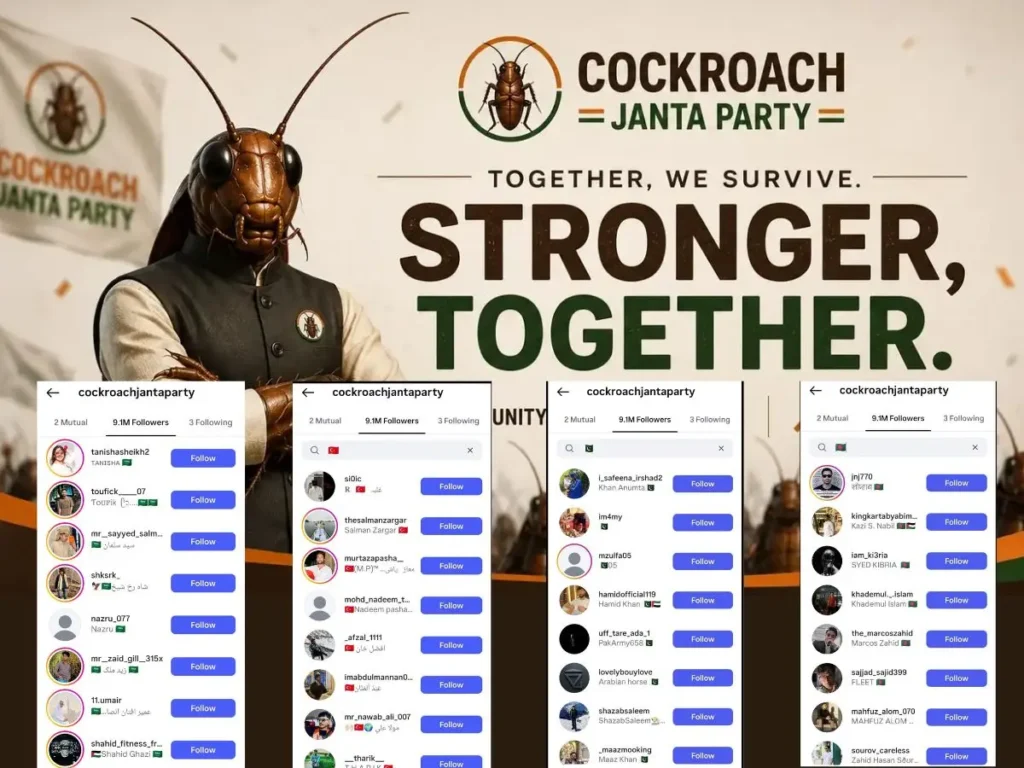
One of the biggest reasons behind CJP’s success has been its strong social media presence.
Within days:
- Instagram pages gained millions of followers.
- Hashtags began trending on X.
- Meme creators joined the movement.
- Reddit communities started forming.
Experts believe this is one of the fastest-growing political satire movements in India’s digital history.
A Unique Mix of Politics and Meme Culture
CJP introduced political discussion in a completely different style.
The movement combines:
- Meme culture
- Dark humor
- Satirical commentary
- Internet slang
- Political criticism
Young users began discussing serious issues through jokes, short videos, and viral content.
Topics frequently highlighted included:
- Exam paper leaks
- Inflation
- Corruption
- Government inefficiency
- Youth depression and stress
Focus on Education Scams and NEET Controversy
One of the major issues raised by the movement was the controversy surrounding the NEET-UG 2026 paper leak.
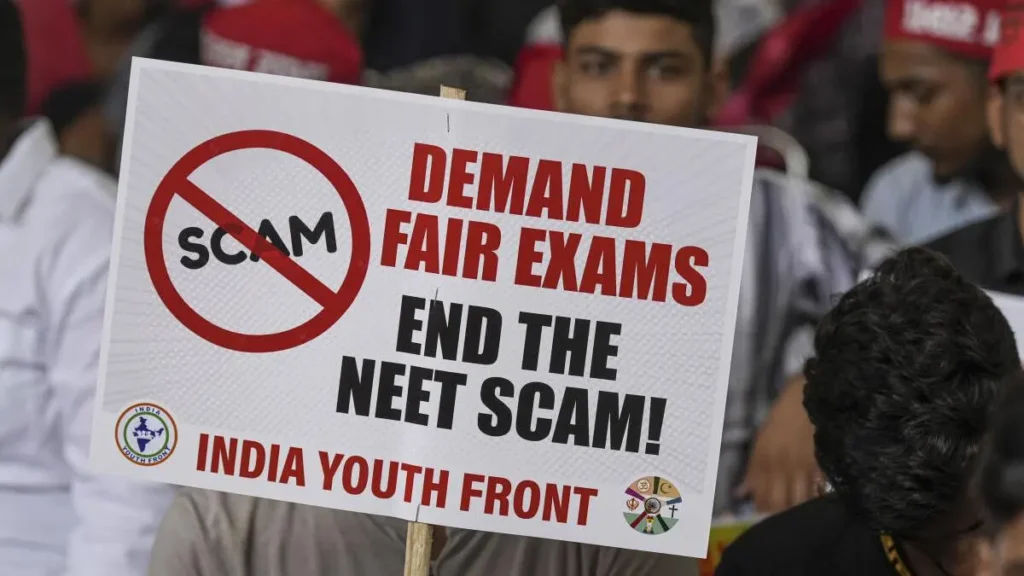
Supporters of CJP criticized:
- Weak exam security
- Corruption in recruitment systems
- Lack of transparency in education
Many students online said:
“This is not just a meme movement — it is our frustration speaking.”
The movement gained particular popularity among students preparing for competitive examinations.
Unemployment Became the Central Issue
Unemployment emerged as the biggest topic associated with the movement.
Social media posts repeatedly highlighted:
- Lack of jobs
- Delays in recruitment
- Competitive exam uncertainty
- Economic pressure on youth
Many young people related strongly to these concerns, which helped the movement spread even faster.
Why Gen Z Is Connecting With CJP
Experts believe India’s Gen Z feels increasingly disconnected from traditional politics.
Young people today prefer:
✔️ Direct communication
✔️ Humor mixed with reality
✔️ Internet-based participation
✔️ Authentic and relatable messaging
CJP successfully used meme culture and digital communication to connect with this generation.
Expansion Through Reddit and Online Communities
The movement also expanded rapidly through Reddit and regional online communities.
Several local groups reportedly emerged in cities and districts where users discussed:
- Civic issues
- Poor infrastructure
- Corruption
- Youth concerns
In some regions, users even started local CJP discussion forums focused on everyday problems.
Criticism and Controversies
Despite its popularity, CJP has also faced criticism.
Some critics argue that:
- It is only an internet trend.
- Meme politics cannot create real change.
- Satire alone cannot solve serious issues.
Others questioned whether the movement had hidden political influences, although no official evidence has confirmed such claims.
X (Twitter) Account Blocking Controversy
According to reports, one of the movement’s accounts on X was temporarily restricted in India, which triggered debates regarding:
- Freedom of expression
- Digital censorship
- Political satire online
The movement later returned through alternative accounts and continued gaining traction.
Political Reactions
Several political leaders reacted to the growing trend.
According to reports, opposition leaders used the movement to criticize the ruling establishment and highlight youth dissatisfaction.
Some analysts described CJP as:
“A symbol of digital protest among Indian youth.”
Celebrities and Influencers Join the Trend
A number of celebrities and social media influencers also participated in the trend.
Reports suggest actor Prakash Raj shared videos connected to the movement, which further increased its visibility online.
Could This Change Future Politics?
Political analysts believe CJP represents a major shift in how political communication works in the digital era.
Today:
- Memes
- Reels
- Viral hashtags
- Online communities
They are influencing public opinion just as strongly as television debates or political rallies.
Experts say internet culture is becoming an increasingly powerful political tool.
Will CJP Become a Real Political Party?
One of the biggest questions now is whether CJP could eventually transform into a real political organization.
Some supporters believe the movement should evolve into:
- A youth advocacy platform
- A civic awareness movement
- Or even a political alternative
However, founder Abhijeet Dipke has reportedly described it primarily as a satirical and social awareness movement for now.
Similar Movements Around the World
Experts compare CJP to several international satirical political movements, such as:
- Italy’s Five Star Movement
- Iceland’s Best Party
- Internet-based protest campaigns in other democracies
These examples show how online communities can eventually influence mainstream politics.
Why the Movement Matters to Young People
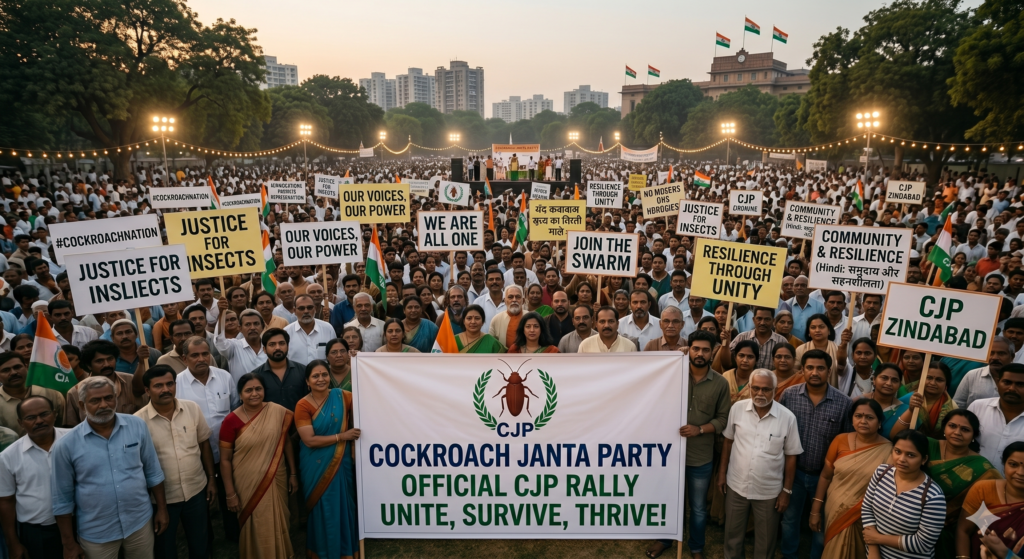
For many young Indians, CJP is not just about humor.
It reflects:
- Frustration with the system
- Fear about the future.
- Anger over corruption
- Anxiety about employment
- And disappointment with traditional politics
Many youths feel their concerns are not being heard through conventional channels.
What Experts Say
Political analysts believe:
“Cockroach Janta Party reflects the digital frustration and emotional exhaustion of India’s younger generation.”
However, experts also warn that:
- Going viral is different from creating long-term political change.
- Internet popularity alone may not translate into real reforms.
Conclusion
Cockroach Janta Party (CJP) may have started as a satirical online movement, but it has quickly evolved into a powerful symbol of youth frustration, digital protest, and internet-driven political expression in India.
The movement demonstrates how:
- Social media is reshaping political conversations.
- Memes are becoming tools of protest.
- And young people are finding new ways to express dissatisfaction.
Whether CJP remains a temporary viral trend or develops into a larger social or political force remains uncertain.
But one thing is clear:
India’s digital generation is no longer staying silent.