

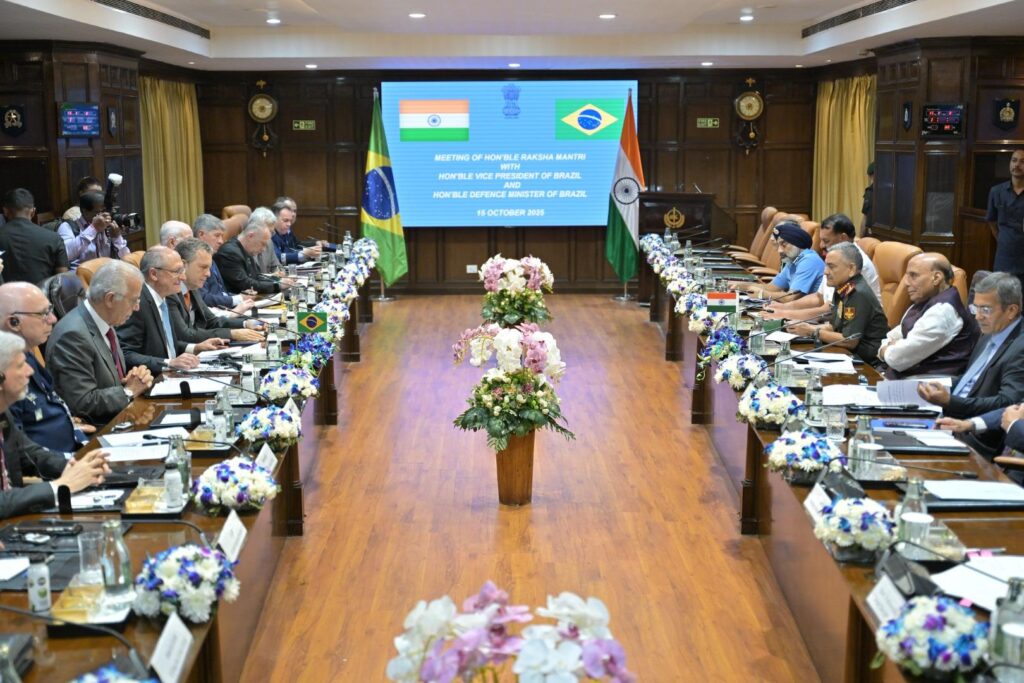
As BRICS nations continue to strengthen cooperation across trade, technology, and strategic sectors, Brazil is now seeking a larger role in India’s rapidly growing defence industry. The latest development comes as Brazilian aerospace giant Embraer intensifies efforts to secure a major defence contract with India by offering its advanced KC-390 Millennium military transport aircraft to the Indian Air Force (IAF). The move reflects Brazil’s broader strategy to deepen defence ties with India while strengthening cooperation within the BRICS grouping.
The growing partnership between India and Brazil highlights the increasing importance of South-South cooperation in defence manufacturing and military technology. As India pushes forward with its “Make in India” and defence modernization initiatives, Brazil sees an opportunity to become a long-term strategic partner in one of the world’s fastest-growing defence markets.
Brazil’s Growing Interest in India’s Defence Market
India has emerged as one of the largest defence spenders in the world. Over the past decade, the country has significantly increased investments in military modernization, indigenous production, aerospace technology, and defence infrastructure.
For Brazil, this presents a major opportunity.
Brazilian defence companies have traditionally focused on Latin America, Europe, and parts of Africa. However, the rapidly expanding Indian market offers access to large-scale procurement programs and long-term industrial partnerships.
According to recent reports, Brazil is actively promoting defence collaboration with India under the BRICS framework and exploring opportunities in aerospace, transport aircraft, defence manufacturing, and technology transfer.
Embraer and the KC-390 Millennium
At the centre of this initiative is Embraer, one of the world’s leading aerospace manufacturers.
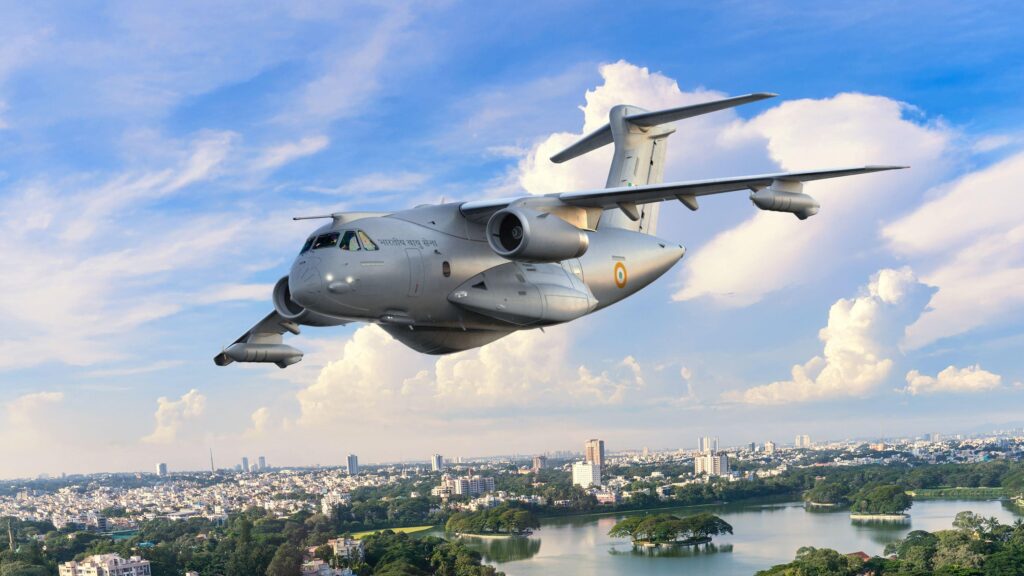
The company is offering the KC-390 Millennium, a modern multi-mission military transport aircraft, to meet the Indian Air Force’s requirement for up to 80 medium transport aircraft.
Key Features of KC-390 Millennium
- Payload capacity of 26 tonnes
- Ability to operate from short and unpaved runways
- Air-to-air refueling capability
- Medical evacuation missions
- Cargo transport operations
- Troop transportation
- Disaster relief support
The aircraft’s payload capacity reportedly exceeds that of the C-130J Super Hercules currently used by many air forces around the world. This capability makes it an attractive option for India’s diverse operational requirements.
Why India Needs New Transport Aircraft
The Indian Air Force is undergoing a major modernization process.
Several aircraft currently in service are aging and require replacement in the coming years. Military transport aircraft play a crucial role in:
- Rapid troop deployment
- Logistics support
- Humanitarian assistance
- Disaster relief operations
- Border area supply missions
- Strategic military mobility
Given India’s geographical size and challenging terrain—from the Himalayas to island territories—modern transport aircraft are essential for maintaining operational readiness.
The requirement for approximately 80 medium transport aircraft represents one of the largest opportunities in the global defence aviation market today.
Strengthening BRICS Cooperation
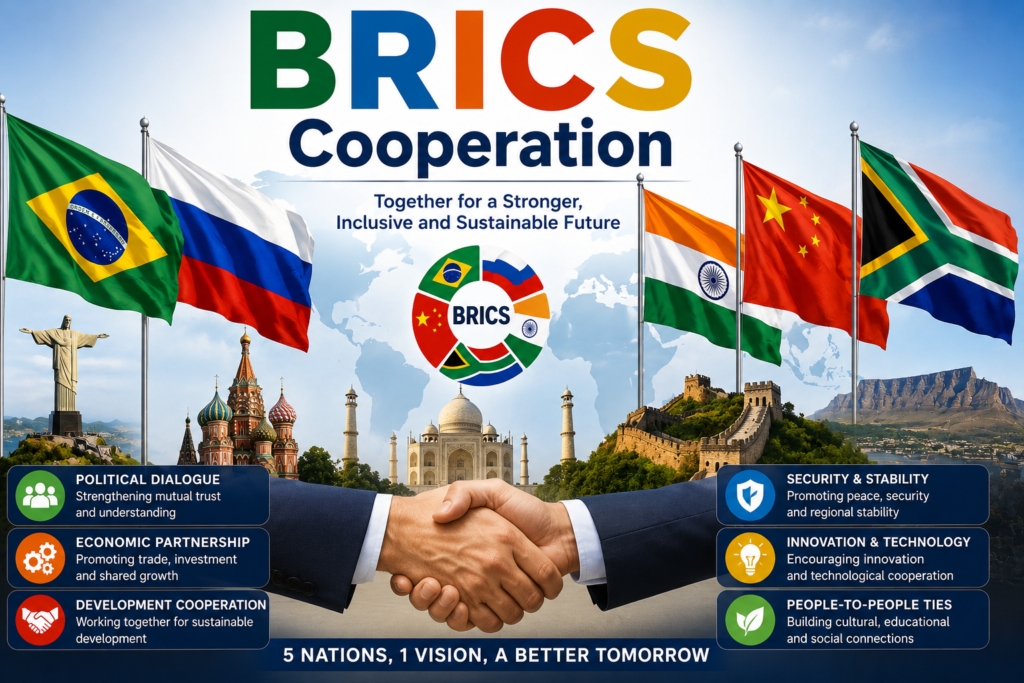
The proposed defence cooperation is not only about aircraft sales. It also reflects the broader strategic objective of increasing collaboration among BRICS nations.
BRICS, which includes Brazil, Russia, India, China, and South Africa, has increasingly focused on economic, technological, and industrial partnerships.
With India holding an important leadership role in BRICS activities during 2026, member countries are seeking deeper cooperation in strategic sectors, including:
- Defence manufacturing
- Aerospace technology
- Artificial Intelligence
- Cybersecurity
- Infrastructure development
- Advanced industrial production
Brazil’s defence outreach toward India aligns with this broader vision of intra-BRICS collaboration.
Opportunities for Make in India
One of the most significant aspects of any future agreement could be local manufacturing.
India’s defence procurement policy increasingly emphasizes:
- Domestic production
- Technology transfer
- Local supply chains
- Joint ventures
- Indigenous capability development
If Embraer succeeds in securing the contract, experts believe the company may be required to establish manufacturing partnerships within India.
Such arrangements could provide:
Technology Transfer
Indian companies could gain access to advanced aerospace technologies.
Employment Generation
Thousands of direct and indirect jobs could be created.
Industrial Development
Local manufacturing would strengthen India’s aerospace ecosystem.
Export Potential
India could potentially become a regional manufacturing hub for future aircraft exports.
Strategic Benefits for Brazil
For Brazil, entering India’s defence sector offers several advantages.
Market Expansion
India represents one of the world’s largest defence procurement markets.
International Visibility
A successful contract with India would significantly enhance Embraer’s global reputation.
BRICS Leadership
Defence cooperation would reinforce Brazil’s role as a key strategic partner within BRICS.
Economic Growth
Large defence contracts generate revenue, jobs, and long-term industrial partnerships.
Brazil sees India not merely as a customer but as a strategic partner capable of supporting future aerospace and defence collaboration.
Challenges Ahead
Despite the promising prospects, several challenges remain.
Competition
The KC-390 faces competition from other international aircraft manufacturers.
Procurement Procedures
India’s defence acquisition process is highly competitive and involves extensive evaluations.
Technology Requirements
India may seek significant technology transfer commitments.
Cost Considerations
Pricing, maintenance, and lifecycle costs will play a critical role in the final decision.
Strategic Evaluation
The Indian Air Force will carefully assess operational performance before making any procurement decision.
India-Brazil Defence Relations
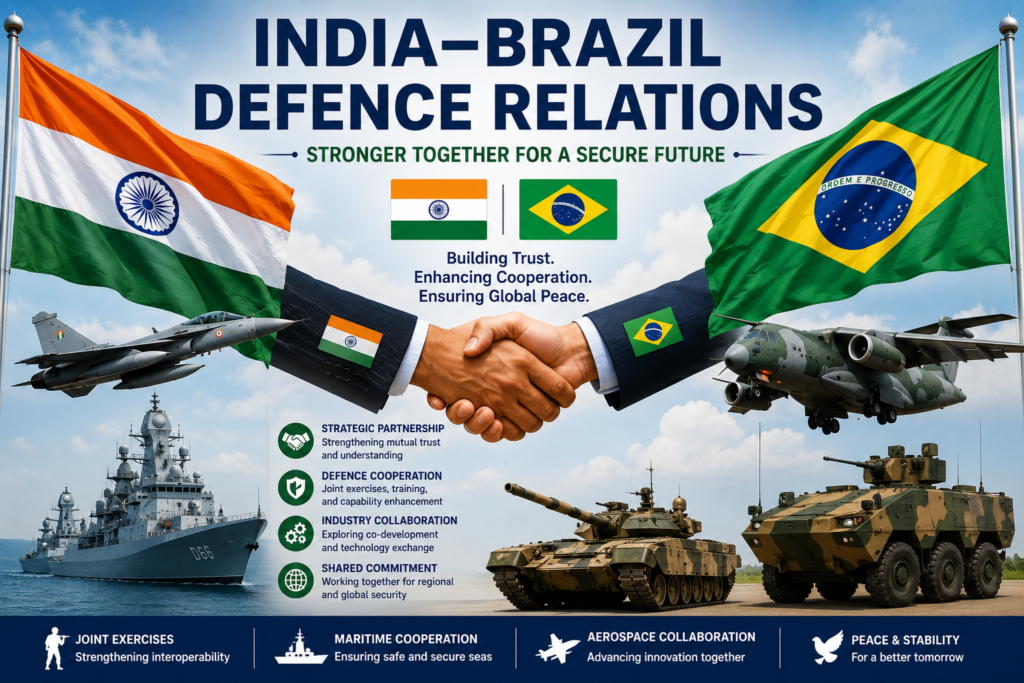
India and Brazil already enjoy strong diplomatic relations.
Both countries cooperate through:
- BRICS
- G20
- United Nations initiatives
- South-South cooperation platforms
Defence cooperation has remained relatively limited compared to trade and diplomacy. However, recent developments indicate a growing willingness to expand military-industrial collaboration.
Experts believe aerospace cooperation could serve as the foundation for broader defence partnerships in the future.
Future Prospects
The coming months are expected to be crucial for India-Brazil defence relations.
If the KC-390 proposal progresses successfully, it could lead to cooperation in additional areas such as:
- Defence electronics
- Space technology
- Drone systems
- Aviation maintenance
- Military training
- Joint research and development
Such collaboration would strengthen both countries’ defence capabilities while supporting the long-term strategic goals of BRICS.
Conclusion
Brazil’s effort to expand its presence in India’s defence sector marks a significant development in BRICS cooperation. Through Embraer’s KC-390 Millennium aircraft proposal, Brazil is seeking to establish itself as a reliable defence and aerospace partner for India. The initiative not only offers India an opportunity to modernize its transport fleet but also opens the door for technology transfer, local manufacturing, and stronger strategic ties between the two major emerging economies.
As India continues to modernize its armed forces and promote domestic defence production, Brazil’s growing interest could become an important chapter in the evolving relationship between the two BRICS nations. The outcome of this potential partnership may influence future defence cooperation within BRICS and reshape aerospace collaboration among emerging global powers.