

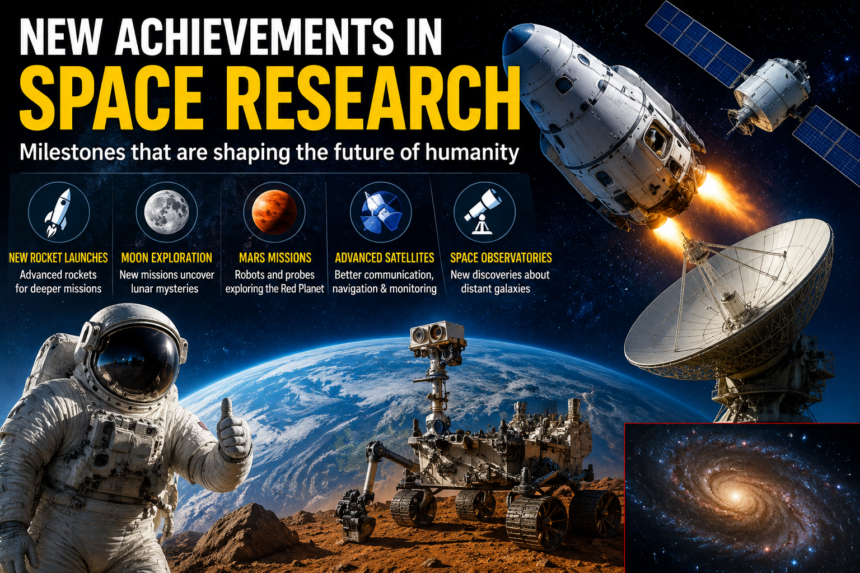
Moon Missions, Mars Exploration, and Deep Space Projects Mark a New Era of Discovery
Special Report | Science Desk
The year 2026 is proving to be a landmark year for space exploration. Major space agencies around the world, including NASA, ISRO, European Space Agency, and JAXA, are advancing ambitious missions focused on the Moon, Mars, and deep space exploration.
Scientists believe that humanity is entering a new age of space discovery, driven by technological innovation, international cooperation, and growing interest in long-term human presence beyond Earth.
Renewed Focus on the Moon Through the Artemis Program
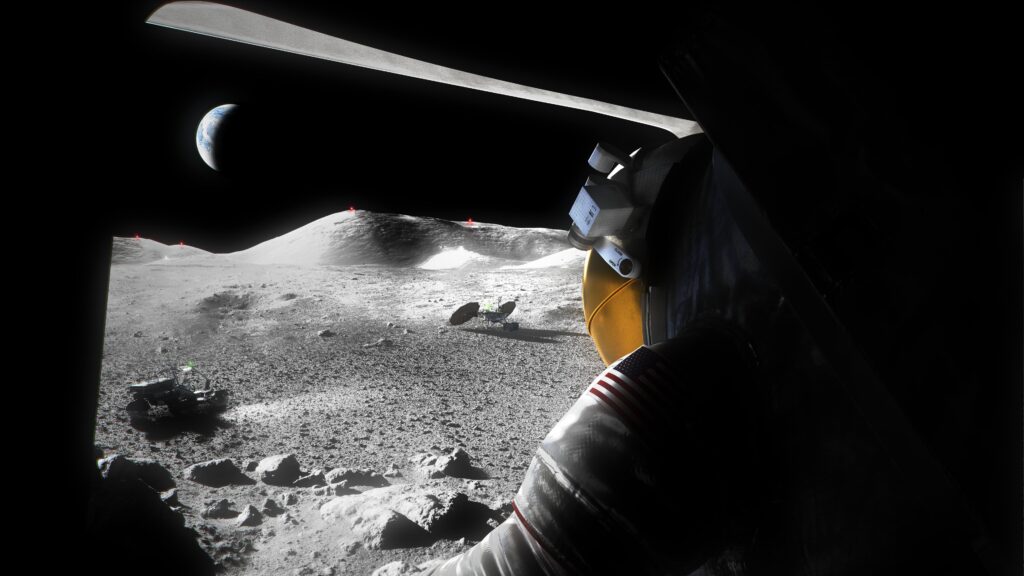
One of the most significant developments in space exploration is NASA’s Artemis Program, which aims to return humans to the Moon and eventually establish a sustainable lunar presence.
The program includes:
- Advanced lunar landers
- New-generation rovers
- Surface habitats
- Scientific research stations
NASA plans to use the Moon as a testing ground for future human missions to Mars. Scientists are particularly interested in studying water ice deposits near the lunar poles, which could provide resources for future astronauts.
Experts believe the Moon could become a key center for scientific research and deep-space exploration in the coming decades.
Major Progress in Mars Exploration
Mars continues to be one of the most exciting targets for planetary research.
Scientists are trying to answer one of humanity’s biggest questions:
Did life ever exist on Mars?
Several missions are currently collecting valuable data about the Red Planet.
Important ongoing projects include:
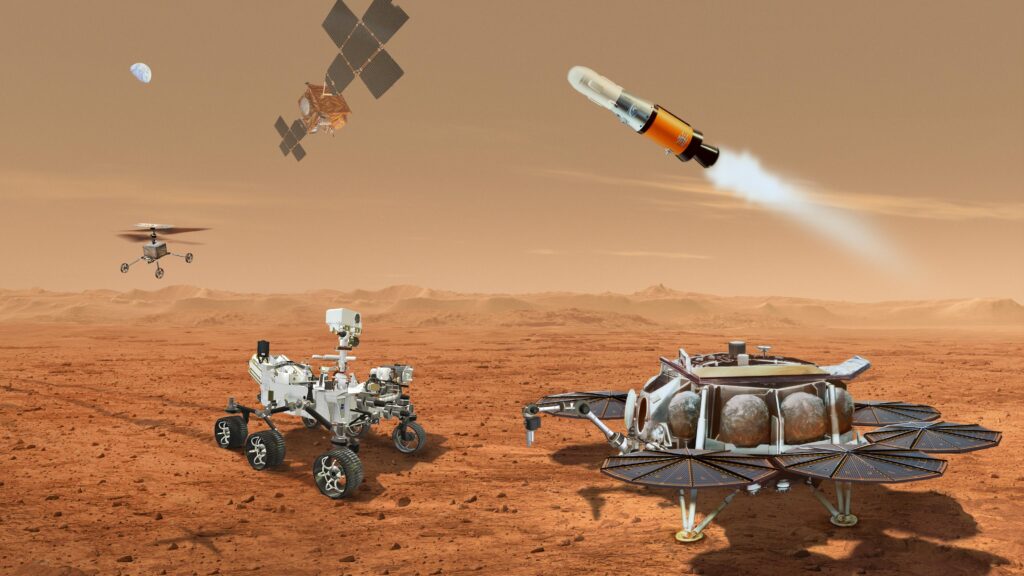
- The Perseverance Rover
- The Curiosity Rover
- Future Mars Sample Return missions
Meanwhile, China is developing its Tianwen-3 mission to bring Martian samples back to Earth, while Japan’s Martian Moons eXploration (MMX) mission aims to study Mars’ moon Phobos.
Researchers hope these missions will provide new insights into the history of Mars and its potential to support life.
Deep Space Missions Expand Human Knowledge
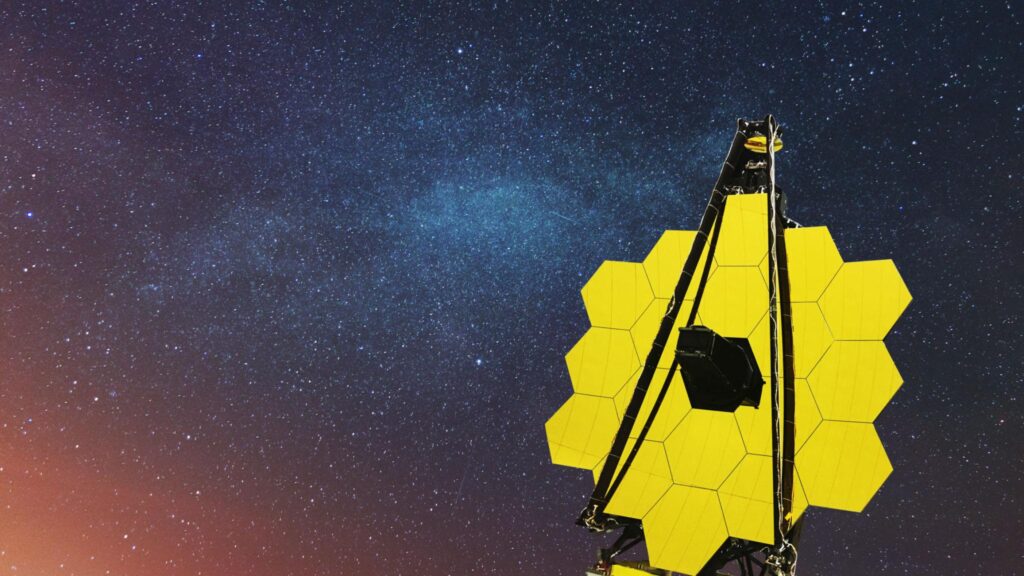
Beyond the Moon and Mars, scientists are increasingly focusing on deep-space exploration.
Several major projects are currently underway, including:
- The Hera asteroid mission
- The BepiColombo mission to Mercury
- Asteroid defense and observation programs
- Jupiter system exploration projects
These missions aim to improve our understanding of:
- Planet formation
- Solar system evolution
- Asteroid threats
- Cosmic environments
Scientists believe that deep-space exploration could unlock answers to many mysteries about the universe.
Scientific Discoveries on the International Space Station
The International Space Station continues to serve as one of the world’s most important research laboratories.
Experiments conducted aboard the ISS include:
- Microgravity research
- Human health studies
- Biological experiments
- Space technology testing
Research carried out on the station is helping scientists understand how humans can survive and work in space for extended periods.
Many of these discoveries are expected to support future missions to the Moon, Mars, and beyond.
Artificial Intelligence and Robotics in Space
Artificial Intelligence (AI) and robotics are becoming essential tools in modern space exploration.
AI is being used for:
- Spacecraft navigation
- Data processing
- Autonomous mission management
- Planetary mapping
Meanwhile, robotic systems are assisting scientists in exploring environments that are too dangerous or distant for human astronauts.
Experts believe AI-powered spacecraft and robotic explorers will play a crucial role in future interplanetary missions.
India’s Growing Role in Space Exploration
India has emerged as one of the world’s leading space powers.
ISRO’s major programs include:
- Chandrayaan
- Gaganyaan
- Aditya-L1
- NISAR Mission
India’s successful space missions have strengthened its reputation as a major contributor to global space research.
Experts believe India could play a significant role in future human spaceflight and deep-space exploration programs.
Growing International Cooperation
Space exploration is increasingly becoming a field of international cooperation rather than competition.
Many current and future missions involve collaboration among:
- The United States
- Europe
- India
- Japan
- Other space-faring nations
Scientists argue that cooperation allows countries to share expertise, reduce costs, and accelerate scientific discoveries.
This collaborative approach is expected to become even more important as missions become more complex and ambitious.
Expert Views
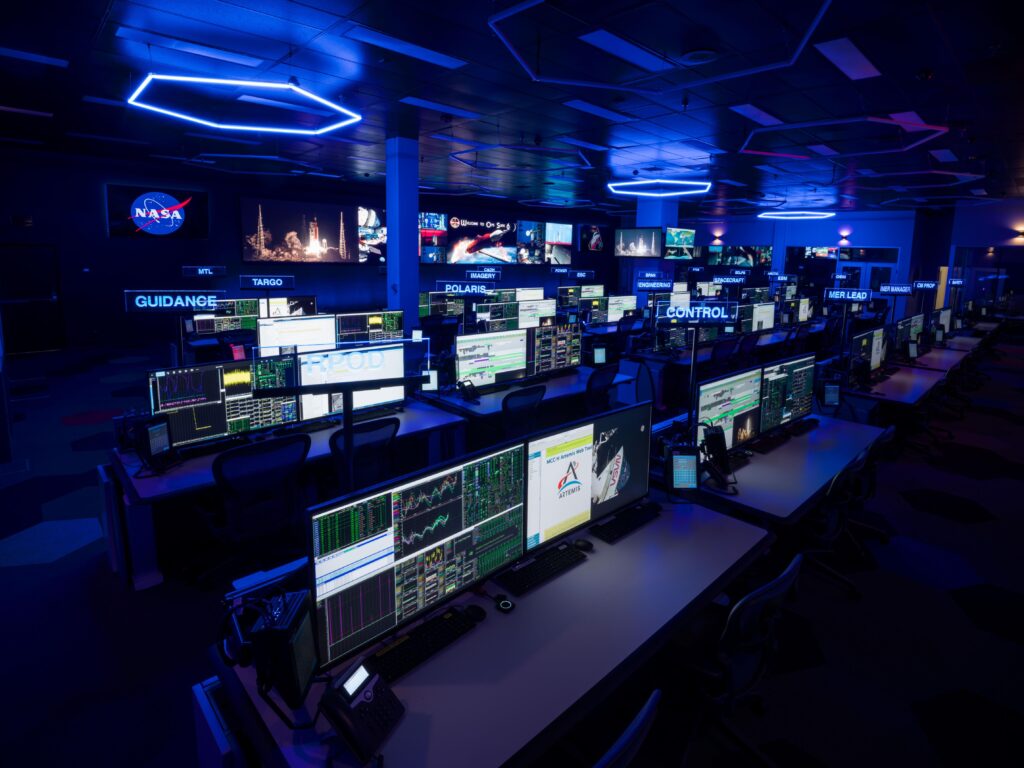
Space experts believe humanity is entering one of the most exciting periods in the history of exploration.
Future possibilities include:
- Permanent lunar bases
- Human missions to Mars
- Space mining
- Advanced deep-space travel
- Long-term settlements beyond Earth
Many ideas that once existed only in science fiction are now moving closer to reality.
Conclusion
Recent achievements in space research demonstrate how rapidly humanity is expanding its reach beyond Earth. From lunar missions and Mars exploration to AI-powered spacecraft and deep-space investigations, scientific progress is opening new frontiers for discovery.
The combined efforts of space agencies, researchers, engineers, and international partners are helping humanity better understand the universe and prepare for future exploration.
As technology continues to advance, the coming decades could witness some of the most extraordinary achievements in the history of space exploration, bringing humanity closer than ever to becoming a truly spacefaring civilization.