

Manila | Special Report
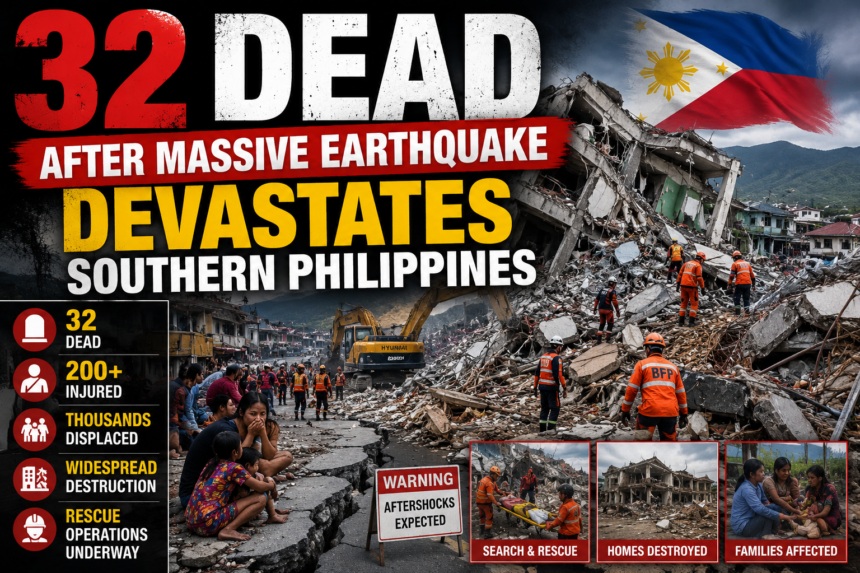
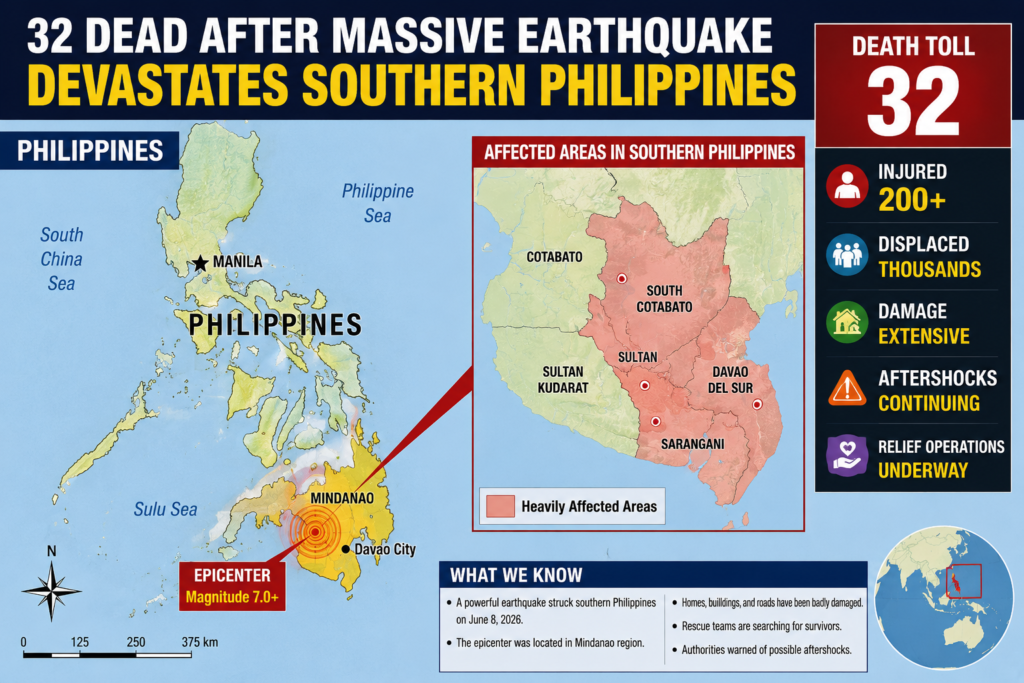
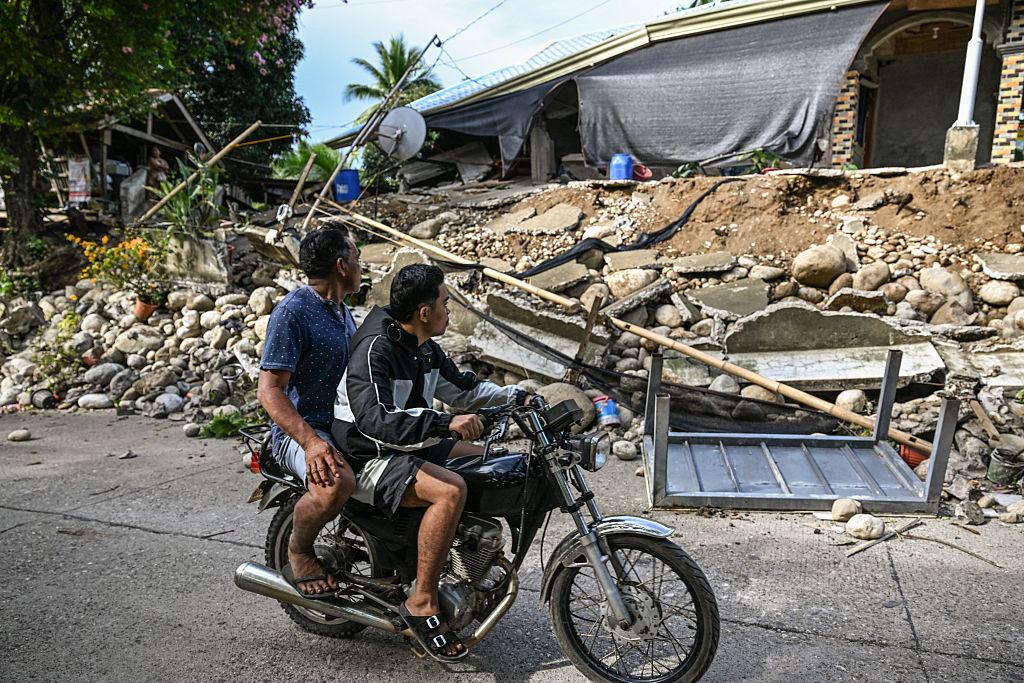
A powerful earthquake struck the southern Philippines on June 8, 2026, leaving at least 32 people dead and hundreds injured, according to local authorities. The devastating quake caused widespread destruction across several provinces, damaging homes, schools, hospitals, roads, and public infrastructure. Rescue teams have been working around the clock to search for survivors trapped beneath collapsed buildings, while emergency services continue to provide assistance to affected communities.
The earthquake has once again highlighted the vulnerability of the Philippines to natural disasters. Located along the Pacific Ring of Fire, the country frequently experiences earthquakes, volcanic eruptions, and typhoons. However, officials describe this latest disaster as one of the deadliest earthquakes to hit the southern region in recent years.
The Earthquake Strikes Without Warning
Residents reported that the earthquake occurred during the early hours of the morning when many people were still asleep.
Witnesses described scenes of panic as buildings shook violently, power lines collapsed, and roads cracked apart. Many families rushed out of their homes seeking safety, while others became trapped under falling debris.
According to preliminary reports from seismological agencies, the earthquake measured more than 7.0 on the Richter scale and was centered near a populated area in southern Philippines. Strong aftershocks continued throughout the day, creating additional challenges for rescue teams.
Emergency officials warned residents to remain alert because significant aftershocks could continue for several days.
Death Toll Continues to Rise
Authorities initially reported a smaller number of casualties, but as rescue operations expanded, the death toll increased steadily.
By Sunday evening:
- At least 32 people had been confirmed dead.
- More than 200 people were reported injured.
- Dozens remained missing.
- Thousands were displaced from their homes.
Officials fear the number of fatalities could rise further as rescuers gain access to remote communities and heavily damaged structures.
Several victims were reportedly killed when residential buildings collapsed, while others died due to landslides triggered by the powerful shaking.
Hospitals across the affected region have been overwhelmed with injured residents seeking medical treatment.
Massive Damage Across Southern Provinces
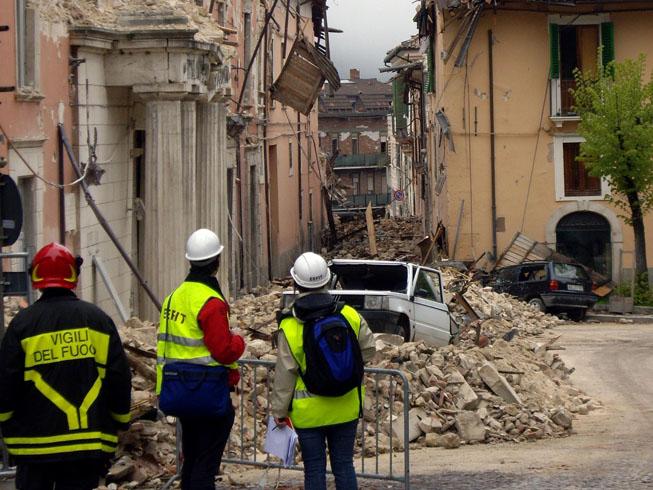
The earthquake caused extensive structural damage throughout the region.
Among the damaged infrastructure were:
Residential Buildings
Hundreds of homes suffered partial or complete collapse, leaving many families homeless.
Schools
Several educational institutions sustained structural damage, forcing authorities to suspend classes while safety inspections are conducted.
Hospitals
Healthcare facilities experienced power outages and infrastructure damage, complicating emergency medical operations.
Roads and Bridges
Major transportation routes were affected, slowing rescue and relief efforts.
Utilities
Electricity and communication services were disrupted in multiple districts, leaving communities isolated for several hours.
Local officials described entire neighborhoods as unrecognizable due to the scale of destruction.
Rescue Operations in Full Swing
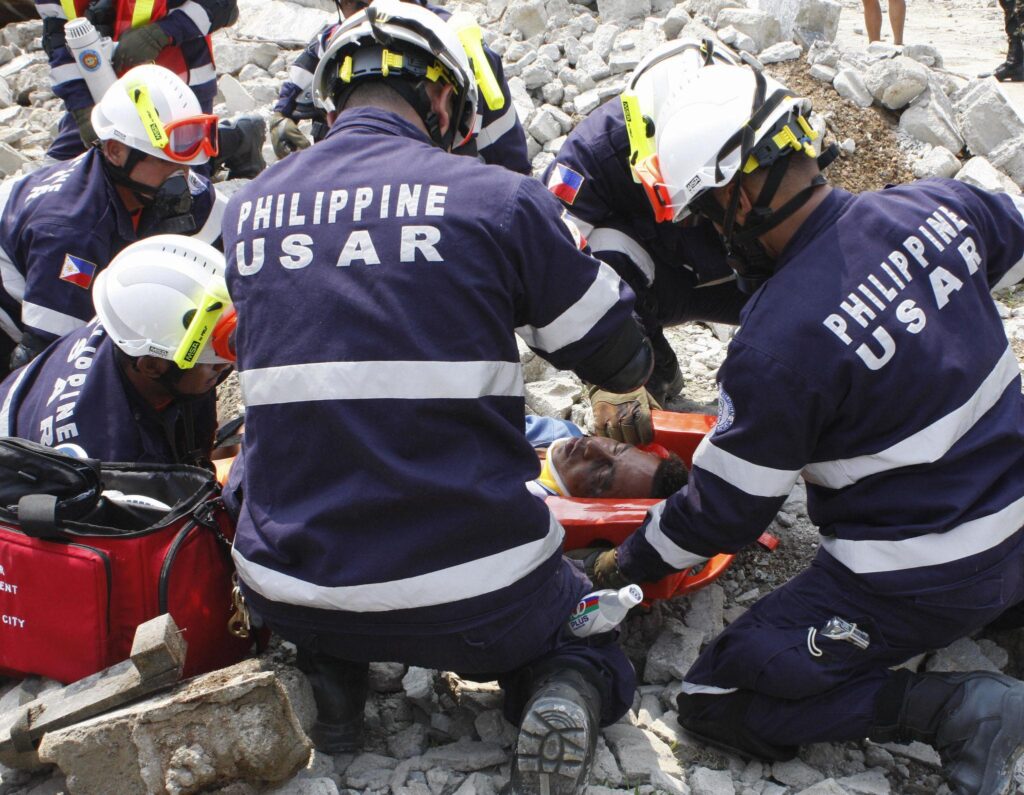
Search-and-rescue teams from across the Philippines have been deployed to the disaster zone.
Emergency responders are using:
- Sniffer dogs
- Thermal imaging equipment
- Heavy excavation machinery
- Specialized rescue tools
to locate survivors trapped under rubble.
Military personnel, firefighters, police officers, and volunteers have joined the effort.
Rescue workers face significant challenges due to damaged roads, unstable buildings, and continuing aftershocks.
Many survivors have been pulled from collapsed structures, giving hope that additional lives may still be saved.
Government Responds to the Crisis
Philippine authorities immediately declared a state of emergency in the worst-affected areas.
Government agencies have mobilized:
- Emergency food supplies
- Temporary shelters
- Medical assistance teams
- Clean drinking water
- Disaster relief funds
The President expressed condolences to families who lost loved ones and promised full government support for recovery and reconstruction efforts.
Officials emphasized that saving lives remains the highest priority during the initial response phase.
Fear and Trauma Among Survivors
Beyond the physical destruction, the earthquake has left deep emotional scars on survivors.
Many residents spent the night outdoors, fearing additional aftershocks.
Parents struggled to comfort frightened children, while elderly residents recounted memories of previous natural disasters.
Mental health specialists warn that large earthquakes often cause long-term psychological stress, including:
- Anxiety
- Sleep disorders
- Depression
- Post-traumatic stress
Community support and counseling services are expected to become important parts of the recovery process.
International Community Offers Support
Several countries and international organizations have expressed solidarity with the Philippines.
Humanitarian agencies are preparing emergency assistance packages, including:
- Medical supplies
- Shelter materials
- Water purification systems
- Food aid
Regional partners in Southeast Asia have also offered technical and logistical support.
The international response reflects growing concern over the humanitarian impact of the disaster.
Why the Philippines Is Prone to Earthquakes
The Philippines sits on the Pacific Ring of Fire, one of the world’s most seismically active regions.
This geological zone is characterized by:
- Frequent earthquakes
- Active volcanoes
- Tectonic plate movements
The country experiences thousands of earthquakes every year, although most are too small to cause significant damage.
Large earthquakes occur when massive tectonic plates beneath the Earth’s surface suddenly shift, releasing enormous amounts of energy.
Scientists note that while earthquakes cannot be prevented, improved building standards and disaster preparedness can significantly reduce casualties.
Economic Impact of the Disaster
The earthquake is expected to have major economic consequences.
Potential impacts include:
Infrastructure Repair Costs
Rebuilding roads, schools, hospitals, and public facilities will require substantial investment.
Business Disruptions
Many businesses have temporarily suspended operations due to structural damage and power outages.
Agricultural Losses
Damage to farms and transportation networks could affect food supply chains.
Tourism Impact
Southern Philippines is home to several tourist destinations that may experience reduced visitor numbers during the recovery period.
Economists believe reconstruction efforts could take months or even years, depending on the extent of the damage.
Lessons from Past Disasters
The Philippines has experienced several major earthquakes over the past decades.
Each disaster has reinforced the importance of:
- Earthquake-resistant construction
- Early warning systems
- Emergency preparedness training
- Public awareness campaigns
Experts argue that continued investment in disaster resilience remains essential as urban populations continue to grow in vulnerable areas.
Many analysts believe that stronger enforcement of building regulations could save countless lives during future disasters.
Hope Amid Tragedy
Despite the devastation, stories of courage and resilience have begun to emerge.
Rescue workers have successfully pulled survivors from collapsed buildings hours after the quake.
Local communities have organized volunteer efforts to distribute food, water, and emergency supplies.
Religious organizations, charities, and ordinary citizens have joined together to support those affected.
These acts of solidarity provide hope during one of the country’s most difficult moments.
What Happens Next?
In the coming days, authorities will focus on:
- Continuing search-and-rescue operations.
- Providing emergency shelter to displaced families.
- Restoring electricity and communications.
- Assessing structural damage.
- Beginning long-term reconstruction planning.
Experts warn that aftershocks remain a significant risk, and residents are being advised to avoid damaged buildings until safety inspections are completed.
Conclusion
The powerful earthquake that struck the southern Philippines has claimed at least 32 lives and left widespread destruction in its wake. As rescue teams continue searching for survivors and authorities coordinate relief efforts, the nation faces a challenging road to recovery. While the full extent of the damage is still being assessed, the disaster serves as a reminder of the constant threat posed by natural hazards in one of the world’s most seismically active regions. The resilience of local communities, combined with national and international support, will play a crucial role in helping affected families rebuild their lives.