
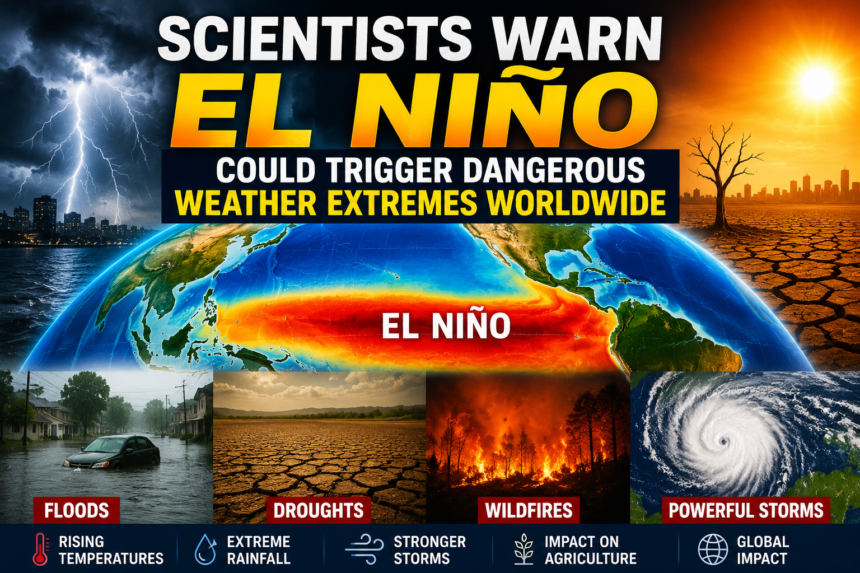
Scientists around the world are warning that a new El Niño event has officially developed in the Pacific Ocean and could become one of the strongest on record. Climate experts say this weather phenomenon is likely to intensify extreme weather conditions across many parts of the world, including heatwaves, droughts, floods, wildfires, and powerful storms. The development has raised concerns among governments, meteorological agencies, farmers, and environmental organizations due to its potential impacts on food production, water supplies, public health, and the global economy.
What Is El Niño?
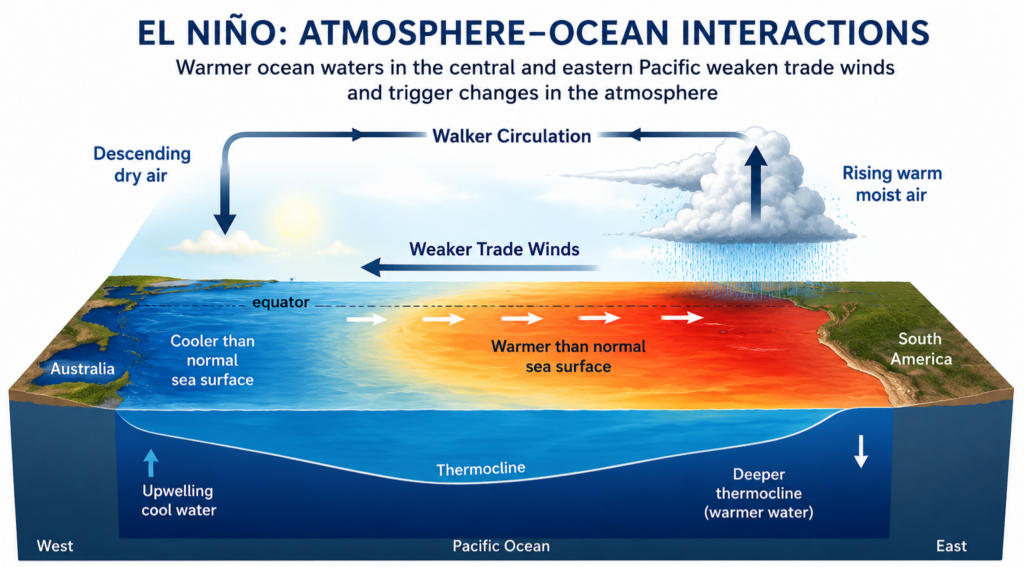
El Niño is a naturally occurring climate pattern that develops when sea surface temperatures in the central and eastern Pacific Ocean become unusually warm. It is part of a larger climate cycle known as the El Niño-Southern Oscillation (ENSO), which alternates between El Niño, La Niña, and neutral conditions. These changes in ocean temperatures influence atmospheric circulation and alter weather patterns around the world.
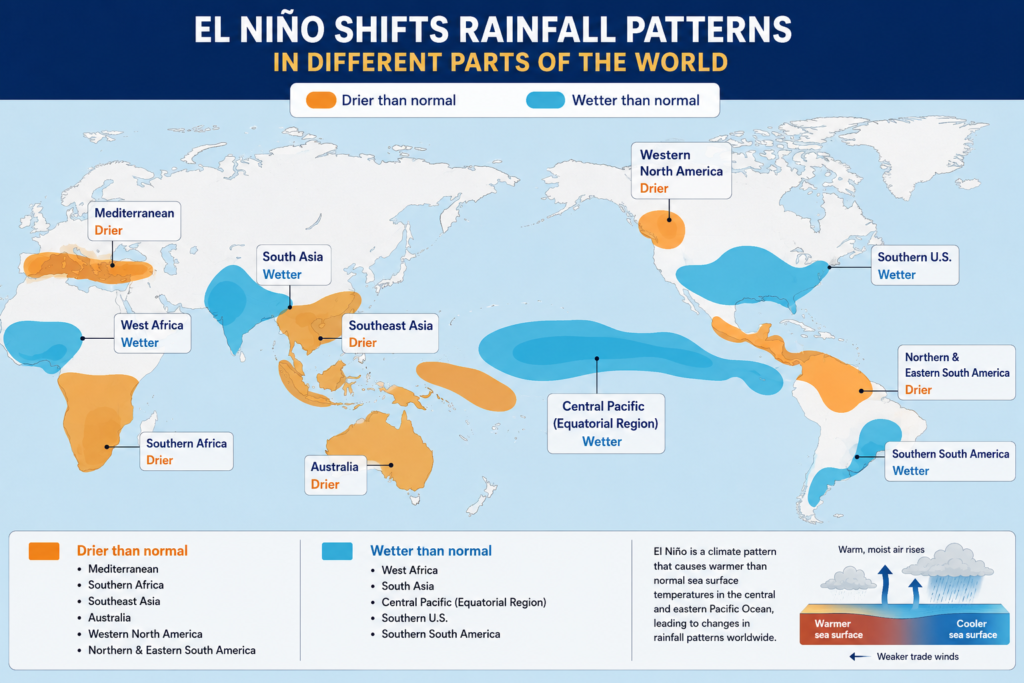
Although El Niño originates in the Pacific Ocean, its effects are felt globally. It can change rainfall patterns, influence temperatures, and increase the likelihood of extreme weather events thousands of kilometers away from where it begins.
Scientists Warn of a Strong Event
According to the World Meteorological Organization (WMO) and several climate agencies, El Niño conditions are now developing rapidly. Experts estimate a high probability that the event will intensify in the second half of 2026 and continue into 2027. Some forecasts suggest it could rival the strongest El Niño events recorded since 1950.
Researchers are particularly concerned because El Niño is occurring in a world already warmed by climate change. Higher global temperatures may amplify the impacts of the phenomenon, leading to more severe heatwaves, stronger storms, longer droughts, and record-breaking temperatures.
Threat of Extreme Heat
One of the most immediate concerns is the possibility of unprecedented heatwaves. El Niño typically raises global temperatures, and scientists warn that 2027 could become one of the hottest years ever recorded. The combination of El Niño and human-caused climate change may push temperatures to dangerous levels in many countries.
Regions such as South Asia, including India, may experience prolonged periods of extreme heat. Higher temperatures can increase health risks, strain electricity grids, and reduce agricultural productivity. Urban areas are particularly vulnerable because of the heat island effect, which causes cities to become even hotter than surrounding regions.
Impact on Rainfall and Drought
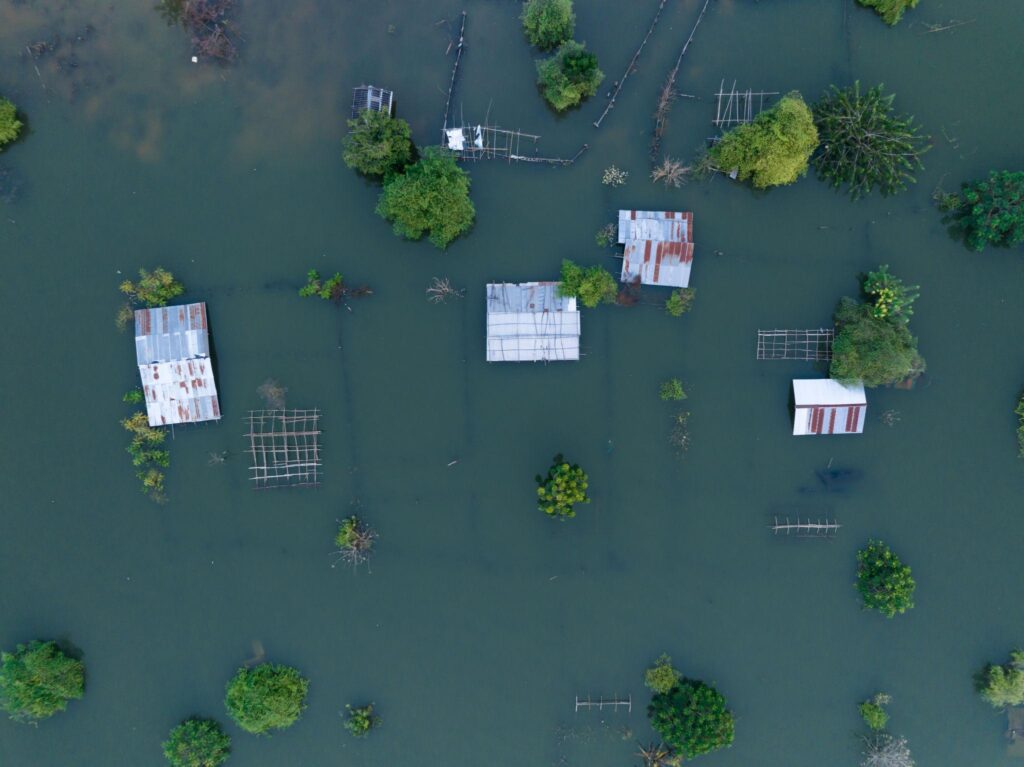
El Niño often causes significant shifts in rainfall patterns. Some areas receive excessive rainfall and flooding, while others experience severe drought.
In South and Southeast Asia, El Niño is frequently associated with weaker monsoon rainfall. Reduced rainfall can lead to water shortages, lower crop yields, and increased stress on reservoirs and hydroelectric systems. Countries heavily dependent on agriculture are particularly vulnerable.
Meanwhile, parts of South America may experience heavy rainfall and flooding. Such events can damage infrastructure, disrupt transportation, and increase the risk of landslides.
Rising Wildfire Risks
Scientists are also warning about an increased risk of wildfires. Drier conditions associated with El Niño can create ideal conditions for fires to spread rapidly.
Recent climate assessments indicate that global fire outbreaks have already reached record levels in 2026. Experts believe El Niño could worsen drought conditions in many regions, including Australia, parts of Asia, and North America, increasing the likelihood of large-scale wildfires.
Wildfires not only destroy forests and wildlife habitats but also release large amounts of carbon dioxide into the atmosphere, further contributing to climate change.
Effects on Agriculture and Food Security
Agriculture is one of the sectors most vulnerable to El Niño.
Changes in rainfall and temperature can affect crop growth, reduce yields, and increase food prices. Crops such as rice, maize, wheat, and soybeans may face significant challenges if droughts or floods occur during critical growing seasons.
The World Bank has warned that a strong El Niño could contribute to higher global food prices. Supply disruptions, combined with weather-related crop losses, could create inflationary pressures in many countries, especially developing economies that rely heavily on agriculture.
For farmers, uncertainty regarding rainfall and temperature makes planning difficult. Governments may need to provide support through drought-resistant seeds, irrigation assistance, and emergency relief programs.
Impact on Water Resources
Water availability is another major concern.
Many regions depend on seasonal rainfall to replenish reservoirs, rivers, and groundwater supplies. A weaker monsoon or prolonged drought can reduce water availability for drinking, agriculture, and industry. Some cities could face water shortages if rainfall remains below normal for extended periods.
At the same time, excessive rainfall in other regions can overwhelm drainage systems, contaminate water supplies, and increase the risk of waterborne diseases.
Economic Consequences
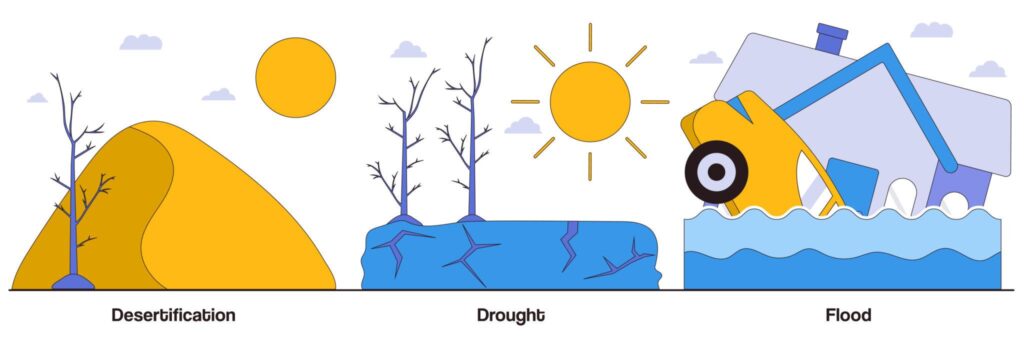
The economic impact of a strong El Niño can be substantial.
Extreme weather events often damage infrastructure, disrupt transportation networks, and increase insurance costs. Agricultural losses can affect rural incomes, while rising food and energy prices may place additional pressure on consumers.
Economists warn that severe weather linked to El Niño could slow economic growth in several countries. Developing nations with limited resources may find it particularly challenging to respond to multiple climate-related shocks.
What Governments Are Doing
Meteorological agencies and governments are closely monitoring the developing event. The WMO has urged countries to strengthen early warning systems, improve disaster preparedness, and support vulnerable communities.
Many governments are preparing emergency response plans for floods, droughts, heatwaves, and wildfires. Agricultural authorities are also advising farmers to adopt climate-resilient practices and monitor weather forecasts closely.
Conclusion
The emergence of El Niño in 2026 represents a significant climate development with far-reaching consequences. Scientists warn that the phenomenon could intensify extreme weather events across the globe, including heatwaves, droughts, floods, wildfires, and storms. While El Niño is a natural climate cycle, its effects may be amplified by ongoing global warming, creating greater risks for communities, ecosystems, and economies. As forecasts suggest a potentially powerful event, experts emphasize the importance of preparation, early warning systems, and climate resilience to reduce the impact of the months ahead.