


Havana | Special Report
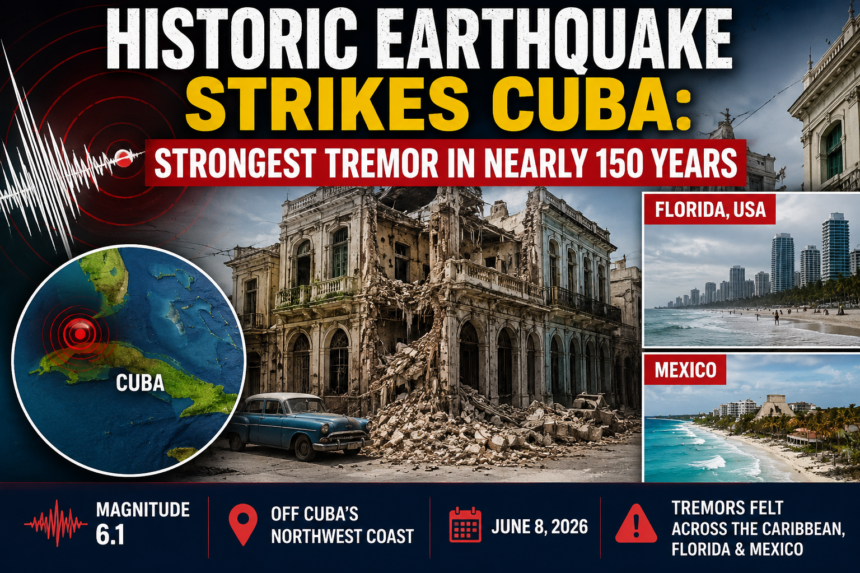
Cuba was shaken by what experts describe as the strongest earthquake to strike the country’s western region in approximately 150 years. The powerful magnitude 6.1 earthquake struck on June 8, 2026, off Cuba’s northwestern coast, sending tremors across the Caribbean and into parts of the United States and Mexico. The event sparked widespread concern throughout the region as residents reported strong shaking and emergency officials assessed potential damage.
According to the U.S. Geological Survey (USGS), the earthquake occurred offshore near the western tip of Cuba and was felt hundreds of kilometers away. Residents in Florida and Mexico’s Yucatán Peninsula also reported noticeable tremors, making it one of the most widely felt earthquakes in the Caribbean this year.
When and Where Did the Earthquake Strike?
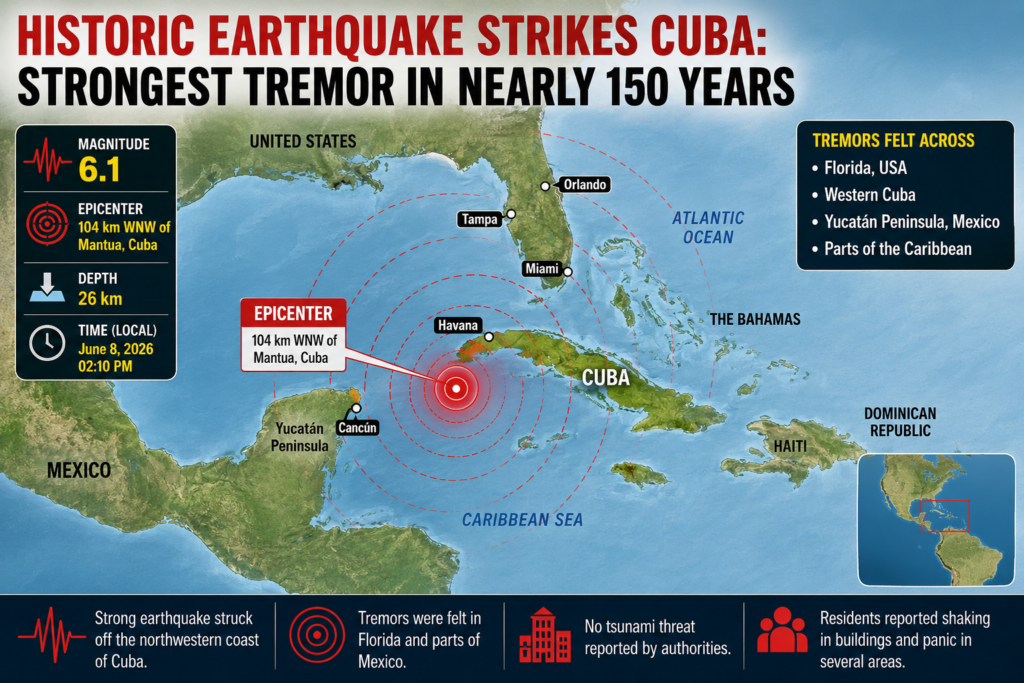
The earthquake measured 6.1 on the Richter scale and occurred approximately 104 kilometers west-northwest of Mantua, Cuba. The quake originated at a depth of around 26 kilometers beneath the seabed.
The tremor struck during the afternoon, catching many residents at work, school, or engaged in daily activities. Witnesses described sudden shaking that lasted several seconds, causing panic in homes, offices, and public buildings.
Many people rushed outdoors as buildings swayed and objects fell from shelves. Emergency services immediately began monitoring the situation.
Panic in Havana
The Cuban capital, Havana, experienced noticeable shaking despite being far from the epicenter.
Residents reported:
- Buildings are vibrating for several seconds.
- People evacuating offices and apartment complexes.
- Temporary disruptions to some services.
- Crowds gathering in open spaces for safety.
Although authorities did not immediately report major structural damage, the earthquake caused significant concern among residents who are unaccustomed to strong seismic activity in western Cuba.
Several government buildings and hotels conducted precautionary inspections to ensure structural safety following the tremor.
Tremors Felt Across Florida
One of the most remarkable aspects of the earthquake was how far its effects traveled.
Residents across southern Florida reported feeling the shaking, particularly in:
- Miami
- Fort Lauderdale
- Key West
- Naples
Many people described a gentle but noticeable swaying sensation in high-rise buildings. Some office workers were temporarily evacuated from buildings while authorities conducted safety checks.
Social media quickly filled with posts from Floridians sharing their experiences and expressing surprise that an earthquake originating in Cuba could be felt in the United States.
Mexico Also Experiences Tremors
The earthquake’s impact extended into Mexico’s Yucatán Peninsula.
Reports indicated that residents in:
- Cancún
- Playa del Carmen
- Tulum
felt mild to moderate shaking. Several hotels and tourist facilities briefly implemented evacuation procedures as a precaution.
Tourists staying in resorts along the Caribbean coast reported feeling buildings sway for a short period before conditions returned to normal.
Was There a Tsunami Threat?
Because the earthquake occurred beneath the sea, initial concerns focused on the possibility of a tsunami.
However, the U.S. Tsunami Warning Center quickly determined that the earthquake was not expected to generate a dangerous tsunami. Officials reassured coastal communities across the Caribbean, Gulf of Mexico, and southeastern United States that no tsunami warning was necessary.
The announcement provided relief to millions of people living in coastal regions who were closely monitoring developments.
Strongest in 150 Years
Seismologists have described the event as the strongest earthquake recorded in western Cuba since the late 19th century.
Historical records indicate that the region experienced a major earthquake around 1880, but few earthquakes of comparable strength have occurred there since then.
The rarity of such a powerful earthquake in western Cuba has attracted significant attention from geologists and disaster management experts.
Why Is Cuba Vulnerable to Earthquakes?
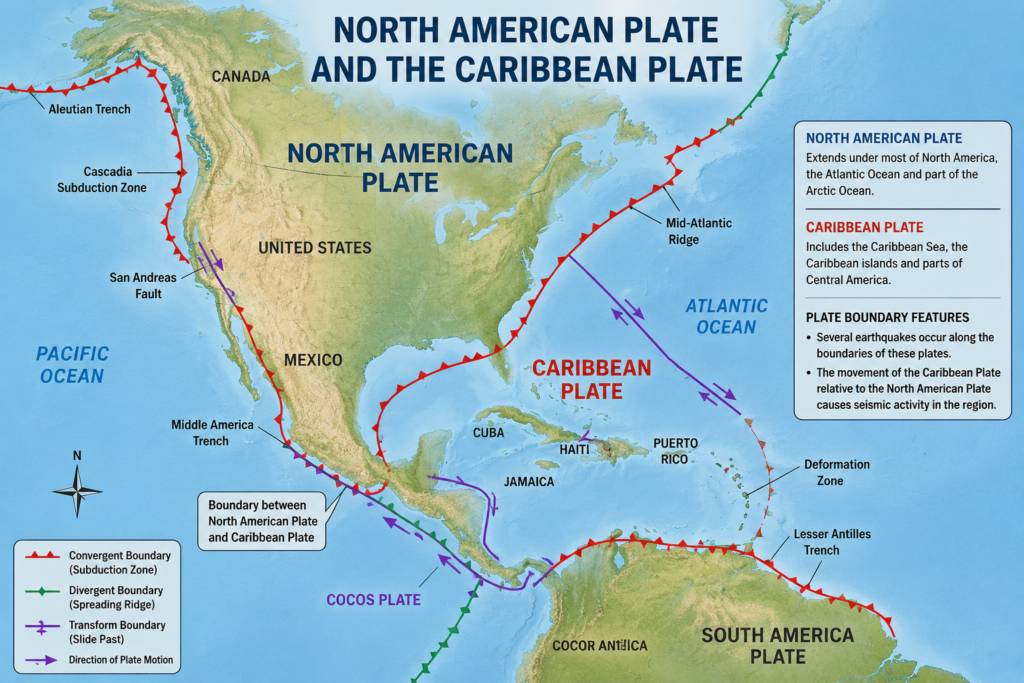
Cuba lies near the boundary between the North American Plate and the Caribbean Plate, making it susceptible to seismic activity.
Most of Cuba’s strongest earthquakes typically occur in the eastern part of the country, near the Oriente Fault Zone. However, this latest earthquake originated in the western region, surprising many experts.
Scientists explain that tectonic stress along underwater fault systems can occasionally produce significant earthquakes even in areas where major seismic events are less common.
Experts Monitor Aftershock Risk
Following the earthquake, seismologists warned that aftershocks could continue in the coming days.
Aftershocks are smaller earthquakes that occur after a major seismic event as the Earth’s crust adjusts to new stress conditions.
Experts advised residents to:
- Stay alert for additional tremors.
- Avoid damaged structures.
- Follow official emergency guidance.
- Prepare emergency supplies if necessary.
Although most aftershocks are weaker than the main quake, they can still cause damage to already weakened buildings.
Emergency Response Efforts
Cuban authorities quickly activated emergency monitoring systems following the earthquake.
Response measures included:
- Structural inspections of public buildings.
- Assessment of roads and infrastructure.
- Monitoring of hospitals and utilities.
- Communication with local governments in affected areas.
Emergency teams remained on standby in case additional seismic activity occurred.
Officials emphasized that there was no immediate evidence of widespread destruction, but inspections would continue.
Impact on Tourism
Cuba and Mexico are both major tourism destinations, and any significant natural disaster raises concerns within the travel industry.
Following the earthquake:
- Hotels conducted safety inspections.
- Some tourist attractions temporarily suspended operations.
- Travel operators reassured visitors about safety conditions.
No major disruptions to international tourism have been reported so far.
Industry experts believe tourism activity is likely to return to normal quickly if no significant structural damage is discovered.
Lessons for Disaster Preparedness
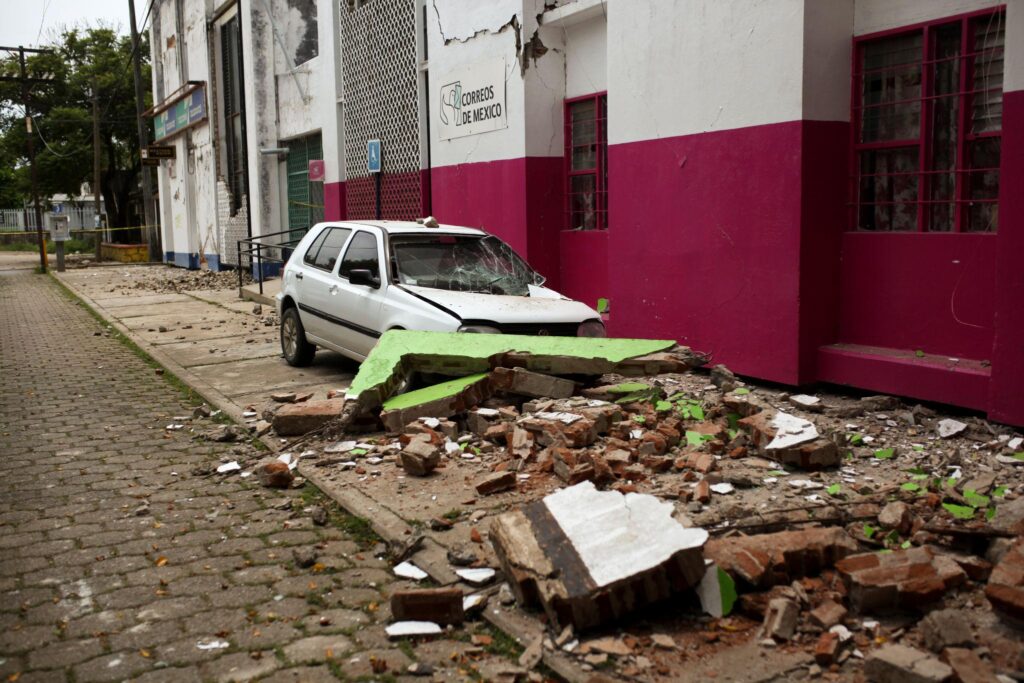
The earthquake serves as a reminder of the importance of disaster preparedness across the Caribbean region.
Experts recommend:
- Strengthening building codes.
- Improving emergency response systems.
- Conducting public awareness campaigns.
- Enhancing regional cooperation on disaster management.
As urban populations continue to grow, preparedness remains one of the most effective ways to reduce risks associated with earthquakes and other natural hazards.
Conclusion
The magnitude 6.1 earthquake that struck off Cuba’s northwestern coast has become one of the most significant seismic events in the region’s modern history. As the strongest earthquake recorded in western Cuba in approximately 150 years, it was powerful enough to send tremors across Florida and Mexico, highlighting the interconnected nature of seismic activity in the Caribbean. While no major casualties or widespread destruction have been reported, the event has prompted renewed attention to earthquake preparedness and regional disaster resilience.