


In the soaring era of artificial intelligence, Nvidia became synonymous with the high-end chips powering data centres and big models. But at a recent event, CEO Jensen Huang made a startling admission: their share in China’s AI accelerator market dropped from about 95 % to 0 %. This isn’t just a business setback—it’s a vivid illustration of how geopolitics, trade controls, and supply-chain fragmentation can rapidly reshape the tech landscape. In this article, we’ll unpack what happened, why it matters for Nvidia (and the industry), and what the ripple effects could be globally.
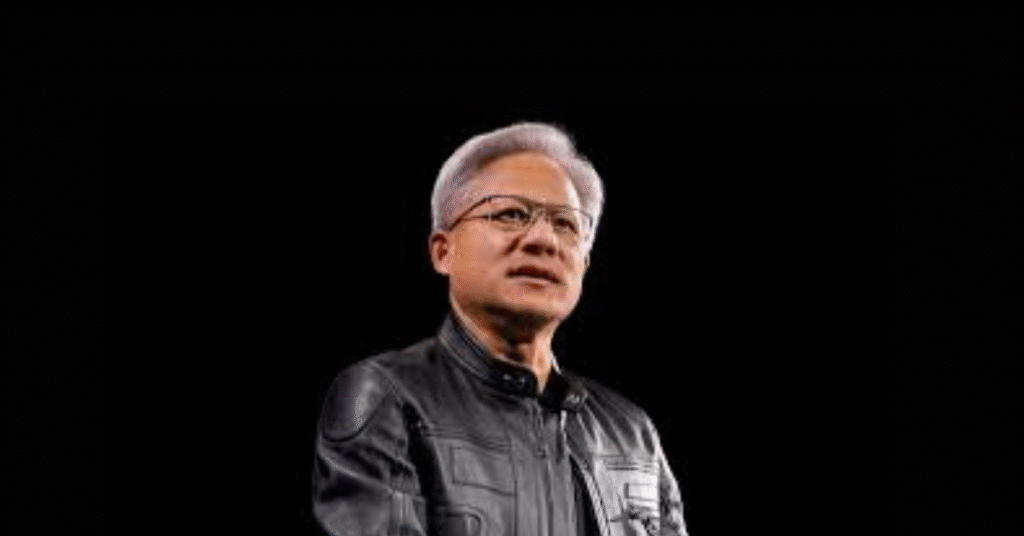
Table of Contents
- The Rise of Nvidia & China as a Key Market
- What Changed: U.S. Export Controls & China’s Response
- The Impact on Nvidia: From Boom to Freeze
- Broader Implications for Chips, AI & Global Tech
- What’s Next for Nvidia and China?
- Conclusion
- FAQs
1. The Rise of Nvidia & China as a Key Market
Over the past decade, Nvidia transformed from a graphics-chip maker into the dominant force in AI computing. Its GPUs were central to training and inference of large models, powering data centres globally. Wikipedia+1
China, for its part, became a vital market. With booming AI investments, data-centres, and thousands of AI researchers, China offered enormous demand. According to Huang, Nvidia once held roughly 95 % of the Chinese market for its advanced AI accelerators. Moneycontrol+2@mathrubhumi+2
2. What Changed: U.S. Export Controls & China’s Response
U.S. Export Controls
Beginning in 2022 and onwards, the United States imposed strict export controls on high-end chips to China, especially those used in AI and large-scale computing. These curbs targeted products such as Nvidia’s A100, H100, nd H200 GPUs. Moneycontrol+1
Nvidia announced that it would exclude China from its revenue forecasts going forward, signalling the depth of the change. Reuters+1
China’s Response
China did not sit idle. Chinese regulators and state-backed firms accelerated efforts to build domestic chip capability. Some Chinese tech companies were reportedly directed to stop buying certain Nvidia models or to look elsewhere. AP News+1
From Huang’s perspective:
“We went from 95% to 0%,” he said. “In all of our forecasts … we’re assuming zero for China. If anything happens in China… it’ll be a bonus.” Moneycontrol+1
3. The Impact on Nvidia: From Boom to Freeze
Revenue Losses & Market Exit
China once contributed a significant chunk of Nvidia’s data-centre business. With that market access effectively shut, Nvidia faces billions in lost revenue. For instance, some reports suggest that a $4.6 billion revenue base in China was affected. Reuters
Strategic and Brand Implications
For Nvidia, having to exclude China from forecasts is also a symbolic blow. It signals a pivot: no longer full global market access. That affects longer-term product strategy, manufacturing decisions, partnerships, and innovation roadmap.
Competitive Landscape Shift
As Nvidia’s dominance wanes in China, local players and other global names have gained space. The export curbs, according to Huang, may inadvertently accelerate the rise of Chinese alternatives. Financial Times
4. Broader Implications for Chips, AI & Global Tech
Supply-Chain Fragmentation
The Nvidia-China situation shows how geopolitical decisions can reshape where chips are designed, made, and deployed. The “global” chip sector is splitting into regional clusters.
Innovation & Research Impact
Huang warned that cutting off China is a mistake because roughly half of the world’s AI researchers are located there. If they build on non-American chips, the global ecosystem could bifurcate. The Guardian
Market Opportunity & Risk
For companies limited in China access, the risk is high—but so is the opportunity for local players. For the U.S. and its firms, losing China may force a rethink of growth trajectories.
5. What’s Next for Nvidia and China?
For Nvidia
- The company may focus more on other regions and strengthen product lines that comply with export rules.
- It may also invest in alternative chip strategies or partnerships outside of China.
- Huang and team remain hopeful of policy change but are treating China as a “bonus” rather than a core market now. Moneycontrol
For China
- Domestic chipmakers will accelerate and receive more state support.
- Chinese policy may continue to restrict foreign high-end chips, pushing autonomy in AI infrastructure.
- China may build its own ecosystem of hardware + software, reducing dependence on foreign tech.
6. Conclusion
The story of Nvidia’s dramatic drop in China—from 95 % market share to effectively zero—is a vivid case study in how tech, trade, and geopolitics intersect. For Nvi,dia it is a strategic reset; for China, a push-boost towards self-reliance; for the global industry, a reorganisation of innovation, supply chains competition. While Nvidia remains a chip powerhouse, the loss of China shows that even the mightiest tech firm can be vulnerable to policy shifts.
FAQs
Q1. Why did Nvidia’s share drop so fast in China?
Because U.S. export controls barred the sale of Nvidia’s most advanced AI chips to Chinese firms, combined with China’s regulatory steps, this led to a collapse in sales. Moneycontrol
Q2. Is Nvidia completely banned in China?
Not fully—but its flagship high-end AI accelerators are largely inaccessible in China due to regulatory/export barriers. Huang states they assume “zero” revenue from China in future forecasts. Reuters+1
Q3. Does this mean China will fall behind in AI chips?
Not necessarily. While they lose access to some foreign tech, China is investing heavily in domestic innovation and may build its own strong chip ecosystem. Huang himself warns of that risk. The Guardian
Q4. Can Nvidia regain the Chinese market?
It’s possible—but it would require significant changpolicy changesort regulatpolicyo regulationn a,, and andChina-U.S.S. relations. Huang hints that any return would be a “bonus.” Moneycontrol
Q5. What does this mean for global chip markets?
It signals increasing regionalisation: countries and companies will diversify supply chains, focus on domestic alternatives, and the industry may split into U.S./allied vs China ecosystems.
Ola Shakti Launches Ola Electric’s Bold Leap into ₹1 Trillion BESS Market: What You Need to Know