

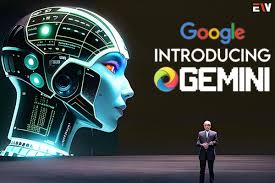
The artificial intelligence landscape is witnessing a seismic shift, and at the epicenter is Google Gemini. This isn’t just another AI model; it’s Google’s most ambitious project to date, a multi-modal powerhouse designed to reclaim its mantle as the leader in AI innovation. This comprehensive guide breaks down everything you need to know about the Google Gemini revolution, from its groundbreaking capabilities to its fierce competition with OpenAI and its profound implications for the future of Google Search and beyond.
What is Google Gemini?
Google Gemini is a family of cutting-edge large language models (LLMs) developed by Google DeepMind. Born from the combined expertise of Google’s former Brain and DeepMind teams, Google Gemini is built from the ground up to be “natively multi-modal.” This means it can seamlessly understand, operate across, and combine different types of information—including text, code, audio, images, and video—from the moment it is trained, unlike other models that stitch separate components together.
This native design allows Google Gemini to perform highly complex tasks, such as reasoning about a diagram, creating code from a handwritten sketch, or analyzing the plot of a movie from its trailer.
The Three Tiers of Power: Gemini Ultra, Pro, and Nano
Understanding Google Gemini requires knowing its three specialized variants, each optimized for different use cases:
- Gemini Ultra: The largest and most capable model, designed for highly complex tasks. It is intended to compete directly with OpenAI’s GPT-4 and is powering the advanced “Gemini Advanced” experience.
- Gemini Pro: The best model for scaling across a wide range of tasks. This is the version currently integrated into the Google Gemini chatbot app and is available to developers through Google’s AI Studio and Vertex AI platforms. It offers a strong balance of performance and efficiency.
- Gemini Nano: A highly efficient model built for on-device tasks. It is currently running on flagship Google Pixel phones, powering features like Summarize in the Recorder app and Smart Reply in Gboard.
Google Gemini vs. The Competition: The AI Arms Race
The launch of Google Gemini marks the most significant direct challenge to OpenAI’s dominance. The competition is fierce:
- vs. OpenAI’s GPT-4: Google claims that its top-tier Gemini Ultra model outperforms GPT-4 on several academic benchmarks, particularly in reasoning, math, and coding. As reported by The Verge, this has ignited a new phase in the AI race, pushing both companies to innovate faster.
- vs. Microsoft’s Copilot: Since Microsoft’s Copilot is built on OpenAI’s tech, the battle also extends to productivity suites, with Google Gemini being integrated into Google Workspace (Docs, Sheets, Slides).
- The “Bard” Rebrand: In a significant move, Google rebranded its Bard chatbot to Google Gemini, unifying its AI identity under this powerful brand, similar to how ChatGPT is the face of OpenAI’s models.
Integration into the Ecosystem: From Search to Android
The true strength of Google Gemini lies in its deep integration into Google’s vast ecosystem:
- Google Search (SGE): Google Gemini is the brain behind the Search Generative Experience (SGE), providing AI-powered summaries and answers directly on the search results page.
- The Gemini App: Google has launched a dedicated Google Gemini mobile app on Android, making it the primary way users interact with its AI, even replacing Google Assistant for some features.
- Google Workspace: Features like “Help me write” in Docs and Gmail are being supercharged by Gemini Pro.
- For Developers: Developers can build applications using Google Gemini Pro via API in Google AI Studio and Google Cloud Vertex AI.

Recent News and Major Updates
The Google Gemini story is evolving rapidly. Key recent developments include:
- Global Expansion: The Google Gemini app and Advanced experience are rapidly expanding to more regions and languages beyond the initial U.S. launch.
- Multimodal Rollout: The crucial multi-modal capabilities (image and video understanding) are gradually being activated for users of the Gemini Advanced (Ultra) tier.
- Code-Generation Enhancements: Google has released AlphaCode 2, a specialized version of Google Gemini Ultra that demonstrates superior performance in competitive programming
- .tazanews24x7.in/google-gemini-ai-ultimate-guide
- Pricing: Access to Google Gemini Pro in chatbots is free. Access to the most powerful Gemini Ultra model requires a paid subscription to the Google One AI Premium plan ($19.99/month), which includes 2TB of storage and other benefits.
The Future and Implications of Google Gemini
The roadmap for Google Gemini suggests a future where AI is deeply embedded in every digital interaction:
- The Future of Search: Search will become less about links and more about conversational, AI-generated answers, fundamentally changing the internet ecosystem.
- On-Device AI: Gemini Nano is just the beginning. Expect more powerful on-device AI that works without an internet connection, offering greater speed and privacy.
- AI in Everything: From smartphones to smart glasses, Google Gemini is poised to become the ubiquitous AI assistant, anticipating needs and generating content contextually.
- Free Tier (Gemini Pro): Visit gemini.google.com or download the “Gemini” app on Android. It’s free to use.
- Advanced Tier (Gemini Ultra): Subscribe to the Google One AI Premium plan to access Gemini Advanced, which offers the most powerful model and future early access to features.
- For Developers: Start building at aistudio.google.com.
For ongoing, detailed technical analysis of AI model releases, a great external resource is arXiv.org, where Google and other companies often publish their research papers.
Stay tuned to TazaNews24x7 for all the latest updates on Google Gemini and the evolving world of artificial intelligence. Check our tech news section for more.