
Nepal Political Crisis 2025: Gen-Z Protests, PM Oli Resigns, and First Female Prime Minister Appointed
Kathmandu, September 2025 — The Nepal Political Crisis 2025 has shaken the Himalayan nation, with unprecedented Gen-Z protests forcing Prime Minister K. P. Sharma Oli to resign. The movement, triggered by a sudden social media ban, escalated into violent demonstrations that resulted in dozens of deaths and thousands injured. In a historic turn, Nepal appointed its first female Prime Minister, former Chief Justice Sushila Karki, while announcing fresh elections for March 2026.
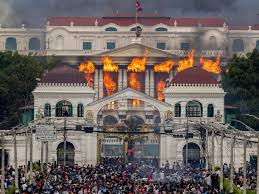
Social Media Ban Sparked the Nepal Political Crisis 2025
The crisis began on 4 September 2025, when the government banned 26 major social media platforms, including Facebook, WhatsApp, YouTube, Instagram, and X (Twitter). Officials claimed that these platforms had failed to register under the new Information Technology Act.
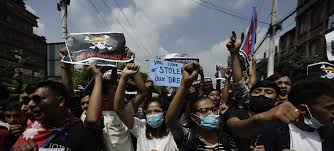
For the youth, however, this move was an attack on freedom of expression. Students across universities and metropolitan cities staged protests, which soon became known as the “Gen-Z Movement”.
Gen-Z Protests and Nepal Political Crisis 2025 Violence
Initially peaceful, the protests escalated when security forces used tear gas, water cannons, and rubber bullets to disperse crowds. In cities like Kathmandu and Pokhara, curfews were imposed, and reports of live ammunition shocked the public.
According to Al Jazeera and other international outlets, over 70 people lost their lives, and thousands were injured. Analysts have called it one of the largest political uprisings in Nepal’s modern history.
Gen-Z Protests and Nepal Political Crisis 2025 Violence
Initially peaceful, the protests escalated when security forces used tear gas, water cannons, and rubber bullets to disperse crowds. In cities like Kathmandu and Pokhara, curfews were imposed, and reports of live ammunition shocked the public.
According to Al Jazeera and other international outlets, over 70 people lost their lives, and thousands were injured. Analysts have called it one of the largest political uprisings in Nepal’s modern history.
Prime Minister Oli’s Resignation During Nepal Political Crisis 2025
Amid violent protests and mounting public pressure, Prime Minister K. P. Sharma Oli resigned on 12 September 2025. His administration, long criticized for corruption and nepotism, faced increasing resentment from young protesters who branded him the face of “elite politics.”
The ruling coalition, seeking to restore credibility, dissolved Parliament and announced fresh elections for March 2026.
Appointment of First Female PM Amid Nepal Political Crisis 2025
To fill the political vacuum, Sushila Karki, Nepal’s former Chief Justice, was appointed interim Prime Minister—the first woman ever to hold the post.
In her first address, she promised:
- Restoration of stability and peace.
- Establishment of an independent inquiry commission for protesters’ grievances.
- Tough action against corruption and nepotism.
- Free and fair elections in March 2026.
Her appointment has been welcomed by youth groups and women’s organizations, though experts caution that the true test lies in her ability to implement reforms.
According to Al Jazeera, over 70 people lost their lives during the Nepal Political Crisis 2025, making it one of the largest uprisings in the country’s modern history.
Impact on India-Nepal Relations
The Nepal Political Crisis 2025 has also strained India–Nepal relations. Border trade was disrupted, causing shortages of fuel, medicines, and essential goods. Traders reported significant losses before the border was partially reopened.
India has expressed support for Nepal’s political transition and assured assistance for restoring stability.
👉 Related Reading: India–Nepal Relations Explained (internal link)
Youth Movement’s Message for the Future
The crisis has sent a strong signal: Nepal’s Gen-Z generation will not tolerate corruption, nepotism, or restrictions on digital freedom.
Key demands from protesters include:
- More employment opportunities.
- Transparent governance.
- Digital freedom and free speech.
- Greater political accountability.
The Nepal Political Crisis 2025 is not just a political event—it marks the beginning of a new political culture led by Nepal’s youth.