

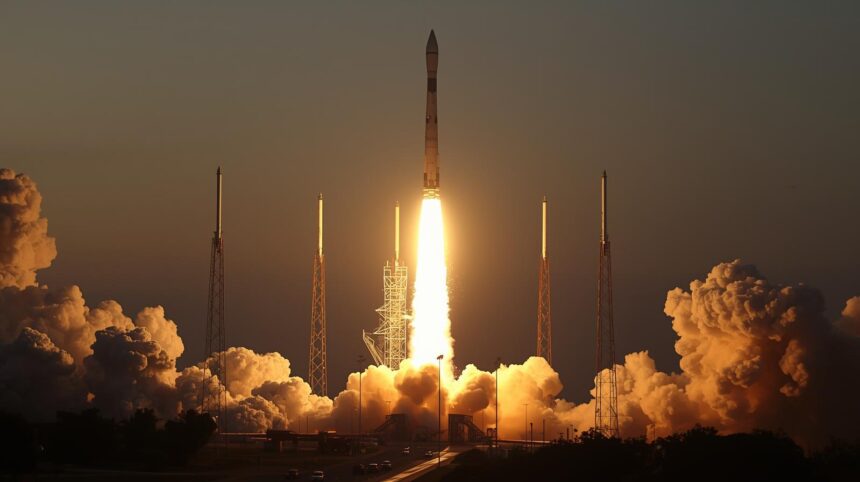
The ISRO’s heaviest communication satellite, GSAT-7R (CMS-03), is ready to mark a major achievement in Indian space history. Scheduled for launch on November 2, 2025, this high-capacity communication satellite will take off aboard India’s most powerful rocket, the LVM3-M5 (also called GSLV Mk III).
According to The Indian Express, GSAT-7R weighs around 4,410 kg, making it the heaviest satellite ever launched from Indian soil.

Why ISRO’s Heaviest Communication Satellite Matters
The GSAT-7R mission carries great national significance:
- Strategic Defence Role: Developed primarily for the Indian Navy, GSAT-7R will provide secure, multi-band communications across the Indian Ocean Region.
- Technological Independence: Unlike earlier heavy satellites (such as GSAT-11) launched from abroad, this satellite will lift off using an Indian rocket.
- Next-Gen Communication Network: It will strengthen India’s defence communications and support maritime assets, aircraft, and command centers.
As per The Times of India, this launch demonstrates India’s ability to deploy strategic satellites independently, a major step toward space self-reliance.
ISRO Heaviest Communication Satellite: Key Specifications
| Specification | Details |
|---|---|
| Satellite Name | GSAT-7R (CMS-03) |
| Weight | 4,410 kg |
| Launch Vehicle | LVM3-M5 (GSLV Mk III) |
| Launch Date | November 2, 2025 |
| Orbit Type | Geosynchronous Transfer Orbit (GTO) |
| Mission Life | 10–12 years |
| Bands | C-band, Extended C-band, Ku-band |
| Primary User | Indian Navy |
| Manufacturer | ISRO Satellite Centre, Bengaluru |
(Sources: ISRO, India Today)
Technical Brilliance Behind ISRO’s Heaviest Satellite Launch
To lift such a massive payload, ISRO has upgraded its LVM3-M5 rocket for improved efficiency and higher thrust. Instead of placing the satellite directly in geostationary orbit, the vehicle will first deploy it into an elliptical orbit (170 km × 29,970 km).
The onboard Liquid Apogee Motor (LAM) will then raise the satellite to its final position — a clever mission strategy that allows heavier payloads without overstraining the rocket.
How GSAT-7R Will Transform India’s Communication Network
The ISRO’s heaviest communication satellite is not just about record weight — it’s about capability. It will:
- Enhance secure data relay between naval ships, submarines, and aircraft.
- Provide real-time communication coverage across vast oceanic and coastal areas.
- Strengthen disaster-response connectivity in remote maritime zones.
This makes GSAT-7R one of India’s most critical satellites for defence and maritime security.
Launch Timeline and Expected Results
- T-0 (Launch): LVM3-M5 lifts off from Sriharikota.
- +17 min: GSAT-7R separates from the upper stage and enters transfer orbit.
- Following Days: Orbit-raising operations commence using onboard propulsion.
- Within 2 weeks: Satellite begins communication testing before full deployment.
ISRO’s Heaviest Communication Satellite: Symbol of India’s Space Power
This mission reinforces India’s place among the elite few nations capable of launching heavy-class communication satellites domestically.
It also paves the way for future heavy missions, including the Gaganyaan human-spaceflight programme and deep-space explorations.
External DoFollow Links
10 FAQs about ISRO’s Heaviest Communication Satellite
- What is the name of ISRO’s heaviest communication satellite?
GSAT-7R (CMS-03). - When will it be launched?
November 2, 2025. - What is its total weight?
About 4,410 kg. - Which rocket will carry it?
The LVM3-M5 heavy-lift vehicle. - Where will the launch take place?
From the Satish Dhawan Space Centre, Sriharikota. - What is its main purpose?
Secure maritime and defence communications for the Indian Navy. - Which orbit will it operate in?
Geostationary orbit (~36,000 km altitude). - What makes this mission unique?
It’s the first time ISRO is launching a 4-tonne-plus communication satellite from India. - Will GSAT-7R replace any old satellite?
Yes, it will succeed GSAT-7A and enhance network capacity. - How long will the satellite remain operational?
Its designed mission life is about 12 years .
Ola Shakti Launches Ola Electric’s Bold Leap into ₹1 Trillion BESS Market: What You Need to Know