

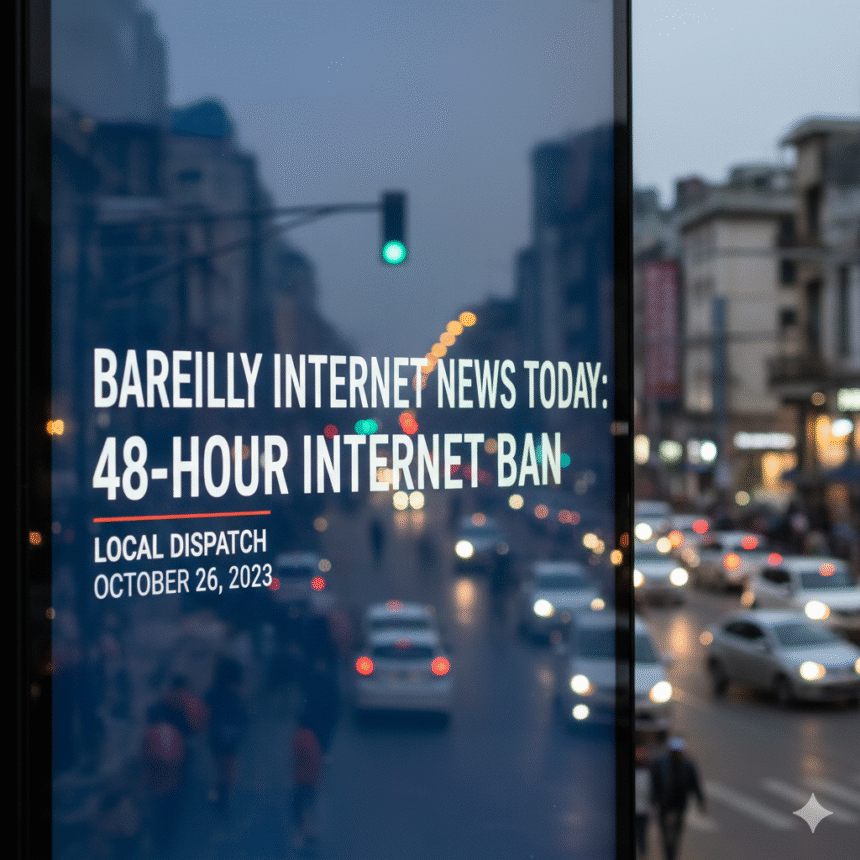
Bareilly Internet News Today has been trending after the district administration announced a 48-hour internet ban in Bareilly, Uttar Pradesh. The ban was imposed following communal tensions triggered by a controversial poster that read “I Love Muhammad”. To maintain law and order, authorities decided to suspend internet services across the city from Friday evening until Sunday evening. The incident has sparked debates on freedom of expression, religious sentiments, and the rising challenges of handling misinformation on social media.
Why Was the Internet Banned in Bareilly?
According to district officials, the Bareilly internet ban was a preventive step. A poster with the message “I Love Muhammad” appeared in a sensitive locality, which led to verbal altercations between two groups. As the issue began escalating, law enforcement agencies feared that social media could be misused to spread rumors, misinformation, or provocative content.
District Magistrate stated, “The internet suspension is temporary and necessary to ensure peace and prevent the spread of any harmful messages that could lead to violence.”
Timeline of Events
- Friday Morning: The controversial poster was spotted in a local market area.
- Friday Afternoon: Arguments broke out between local groups; police were deployed in the area.
- Friday Evening: District administration ordered a 48-hour internet shutdown in Bareilly.
- Saturday Morning: Heavy police deployment in sensitive zones; peace appeals were made.
- Sunday Evening: Authorities reviewed the situation and assured restoration of internet after security clearance.
Impact on Daily Life
The Bareilly internet shutdown has directly affected schools, businesses, and common citizens. Students preparing for competitive exams, small traders using UPI payments, and people dependent on online services faced severe inconvenience.
Local shopkeeper Ramesh Gupta said, “We depend on digital transactions every day. Without internet, customers cannot pay us. It’s a huge loss.”
Students also expressed frustration as many rely on online classes and study material. The ban highlighted the growing dependence of people on digital infrastructure in their everyday lives.
Social Media and Misinformation Concerns
Officials clarified that one of the main reasons for the Bareilly internet ban was the rapid spread of misinformation through WhatsApp forwards, Facebook posts, and X (formerly Twitter) updates. Past incidents in Uttar Pradesh have shown how rumors can quickly escalate into large-scale conflicts.
Cyber experts argue that while an internet ban is a short-term solution, long-term measures like stricter monitoring and awareness campaigns are needed to prevent misuse of digital platforms.
Political Reactions
The Bareilly internet news today has also triggered political responses. Opposition parties criticized the administration for failing to manage the situation without resorting to an internet ban.
Meanwhile, ruling party leaders defended the decision, claiming that the ban was essential to protect harmony and prevent violence.
Political analysts believe that such incidents could impact public perception, especially with elections around the corner.
Voices from the Ground
Residents are divided in their opinion. Some support the government’s decision, believing that it prevented potential clashes, while others are frustrated with the inconvenience.
Muslim clerics appealed for calm, saying, “The message on the poster should not be misinterpreted. Islam teaches peace, and we request everyone not to fall for rumors.”
Larger Implications for Internet Shutdowns in India
India has witnessed the highest number of internet shutdowns globally in recent years. According to Access Now, India imposed over 80 shutdowns in 2023 alone. The Bareilly internet ban once again raises questions about whether internet suspensions should be the default response to sensitive incidents.
Civil rights activists argue that internet shutdowns affect the fundamental right to information and disrupt livelihoods. However, law enforcement agencies continue to rely on this tool as a quick solution to prevent violence.
Internal & External Links for SEO
- 🔗 Internal: Uttar Pradesh Latest News
- 🔗 Internal: India Internet Shutdowns
- 🔗 External: Access Now – Internet Shutdowns
- https://bareilly.nic.in/
Conclusion
The Bareilly internet news today reflects the delicate balance between maintaining public order and ensuring digital rights. While the administration’s 48-hour ban prevented immediate violence, it also caused widespread disruption in education, business, and daily communication.
As India continues to face challenges in handling sensitive issues, experts suggest that authorities should focus on strengthening community dialogue, countering misinformation, and promoting digital literacy instead of repeatedly relying on internet shutdowns.
For now, the Bareilly internet ban remains a reminder of how quickly local incidents can spiral into major controversies in the digital age.