
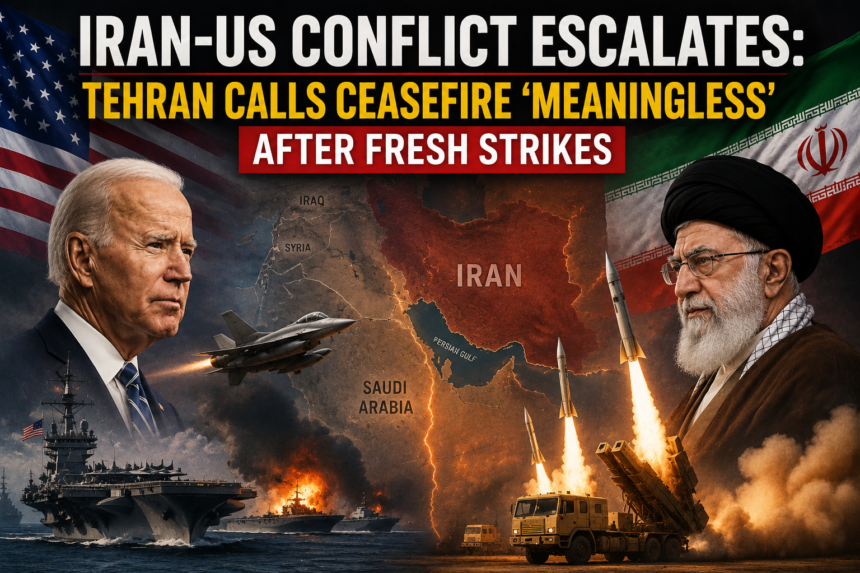
The fragile ceasefire between the United States and Iran has come under severe strain after both countries exchanged fresh military strikes across the Middle East. Iranian officials have declared that the ceasefire is now “practically meaningless,” accusing Washington of undermining diplomatic efforts through continued military operations. The latest developments have heightened fears of a wider regional conflict, disrupted global energy markets, and renewed concerns about the security of the strategically important Strait of Hormuz.
Fresh Escalation in the Middle East
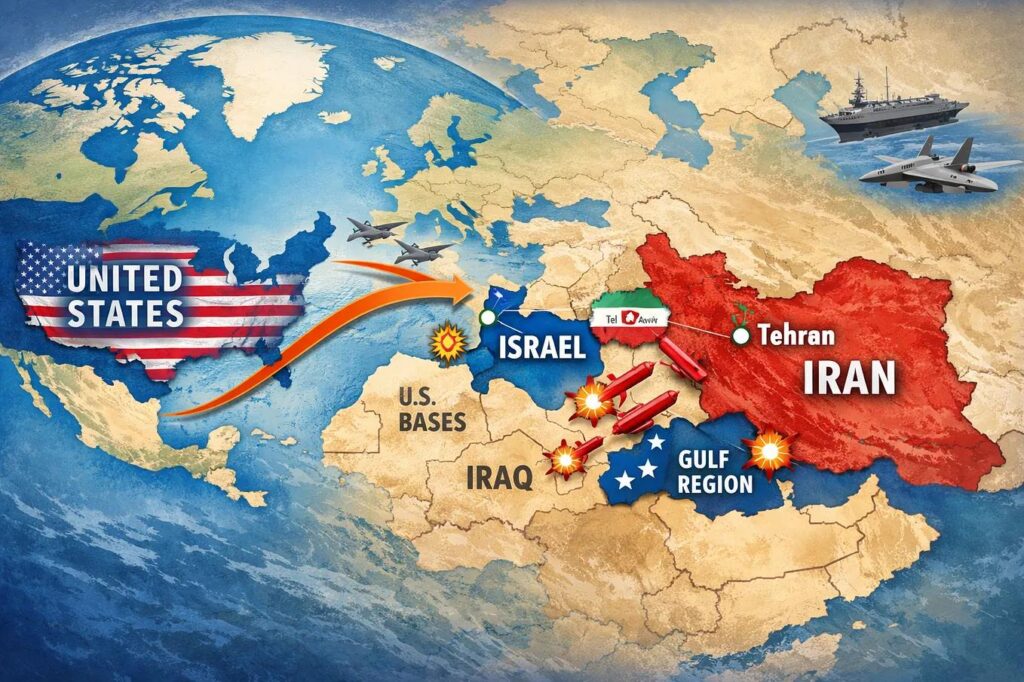
The latest crisis erupted after the United States launched a new round of airstrikes against multiple Iranian military targets. According to U.S. officials, the attacks were carried out in self-defense and were aimed at military infrastructure linked to recent Iranian actions against American interests in the region. The strikes reportedly targeted surveillance facilities, radar systems, and military installations.
Iran responded swiftly by launching missile and drone attacks toward locations hosting American military forces in Bahrain, Kuwait, and Jordan. Regional defense systems intercepted many of the incoming projectiles, but the exchange marked one of the most serious violations of the ceasefire since it was established earlier this year.
Iran Declares Ceasefire “Practically Meaningless”
Iran’s Foreign Ministry strongly condemned the latest American strikes, arguing that Washington’s actions have effectively destroyed any remaining value of the ceasefire agreement. Iranian officials stated that military attacks conducted during ongoing negotiations make diplomatic efforts increasingly difficult and undermine trust between the two sides.
Tehran has repeatedly insisted that negotiations cannot proceed under military pressure. Iranian leaders claim that while they remain open to diplomacy, continued U.S. military operations demonstrate a lack of commitment to peaceful solutions. The statement describing the ceasefire as “practically meaningless” reflects growing frustration within Iran’s leadership.
The Strait of Hormuz at the Center of the Crisis
One of the most alarming developments involves the Strait of Hormuz, a narrow but critically important waterway connecting the Persian Gulf with the Gulf of Oman and the Arabian Sea.
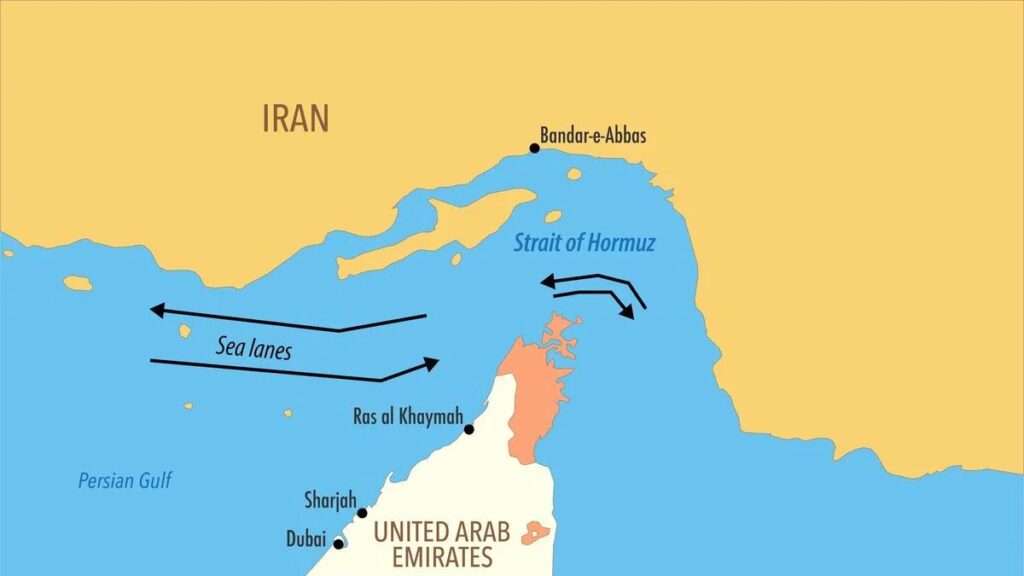
Iran has claimed that the Strait of Hormuz is effectively closed to shipping until further notice. American officials, however, dispute these claims and maintain that commercial traffic continues to move through the area. Regardless of the exact situation, uncertainty surrounding the waterway has already raised concerns across global markets.
The Strait of Hormuz handles a significant percentage of the world’s oil exports. Any disruption to shipping in this region can immediately impact energy prices, trade routes, and international economic stability. Analysts warn that a prolonged confrontation could trigger major supply chain disruptions worldwide.
Impact on Global Oil Prices
Financial markets reacted quickly to the latest military escalation. Oil prices climbed sharply as investors assessed the possibility of shipping disruptions and wider regional instability. Energy traders remain particularly concerned about any threat to tanker traffic through the Gulf.
Several economic analysts have warned that prolonged fighting could contribute to higher inflation globally. Rising fuel prices often lead to increased transportation and manufacturing costs, creating pressure on economies already facing inflation challenges.
Military Actions Continue
President Donald Trump has maintained a tough stance toward Tehran, warning that additional military action could follow if Iran refuses to engage seriously in negotiations. American officials insist that the strikes are intended to protect U.S. forces and maintain regional security rather than initiate a broader war.
Iran’s Revolutionary Guard Corps (IRGC) has responded with equally strong rhetoric. Iranian military commanders warned that continued attacks could turn the region into what they described as “hell,” signaling Tehran’s readiness to expand its military response if necessary.
Regional Countries on High Alert
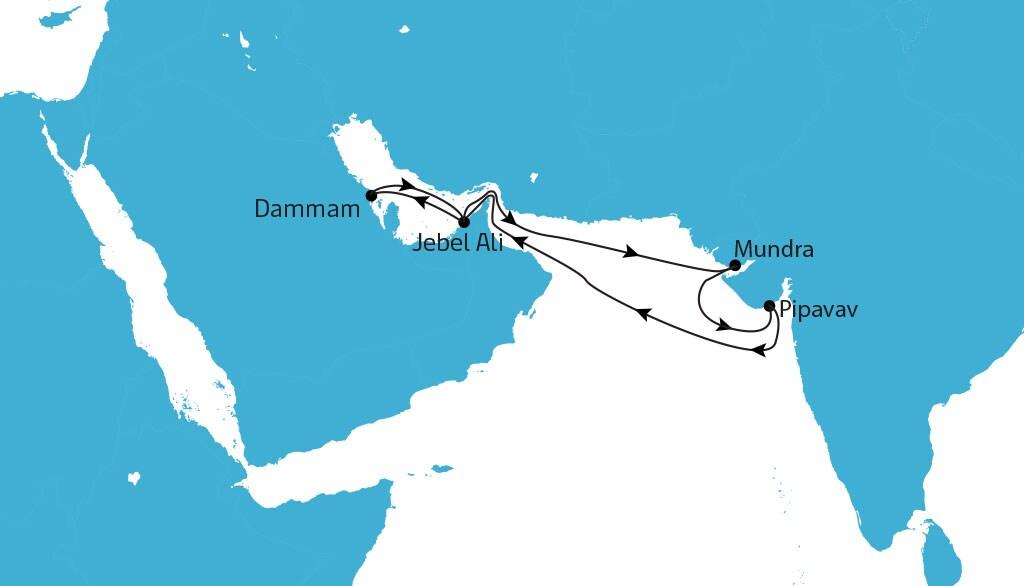
The crisis has placed neighboring countries on high alert. Bahrain, Kuwait, Jordan, Saudi Arabia, and the United Arab Emirates are closely monitoring developments because many host American military assets or lie near potential conflict zones. Air defense systems across the Gulf have been activated as governments seek to protect civilian populations and critical infrastructure.
Several Gulf nations have called for restraint from both Washington and Tehran, emphasizing that further escalation could destabilize the entire region. Many governments fear becoming caught in the middle of a conflict between two powerful adversaries.
Diplomatic Efforts Continue
Despite the military exchanges, diplomatic channels remain active. Reports indicate that indirect negotiations between the United States and Iran are continuing through regional mediators. Discussions reportedly include the release of frozen Iranian funds, sanctions relief, and mechanisms to reduce military tensions.
However, progress remains uncertain. Iranian officials argue that trust has been severely damaged by recent attacks, while U.S. leaders continue to demand concessions related to regional security and maritime navigation. The gap between both sides remains significant.
Humanitarian and Security Concerns
As military operations intensify, humanitarian organizations are expressing concern about civilian safety. Airstrikes, missile attacks, and drone operations increase the risk of civilian casualties and infrastructure damage. The possibility of a broader conflict could also trigger population displacement and create additional challenges for aid agencies working across the region.
Reports have also emerged of casualties involving international shipping in the Gulf of Oman, highlighting the dangers faced by commercial vessels operating near the conflict zone. Such incidents have intensified concerns among shipping companies and maritime insurers.
What Happens Next?
The coming days are likely to be crucial. If both sides continue exchanging military strikes, the ceasefire could collapse entirely, potentially drawing additional regional actors into the conflict. On the other hand, ongoing diplomatic talks offer a narrow path toward de-escalation.
Military analysts believe that the situation remains highly volatile. Any miscalculation, accidental confrontation, or attack causing significant casualties could rapidly transform the current crisis into a much larger regional war. At the same time, both Washington and Tehran face economic and political pressures that may encourage a return to negotiations.
Conclusion
The latest exchange of strikes between the United States and Iran has pushed the Middle East closer to a dangerous turning point. Iran’s declaration that the ceasefire is “practically meaningless” reflects the deep mistrust that now characterizes relations between the two countries. With missiles flying, oil prices rising, and the Strait of Hormuz once again becoming a focal point of global concern, the world is watching closely to see whether diplomacy can prevail over confrontation.