

London/Brussels | Special Report
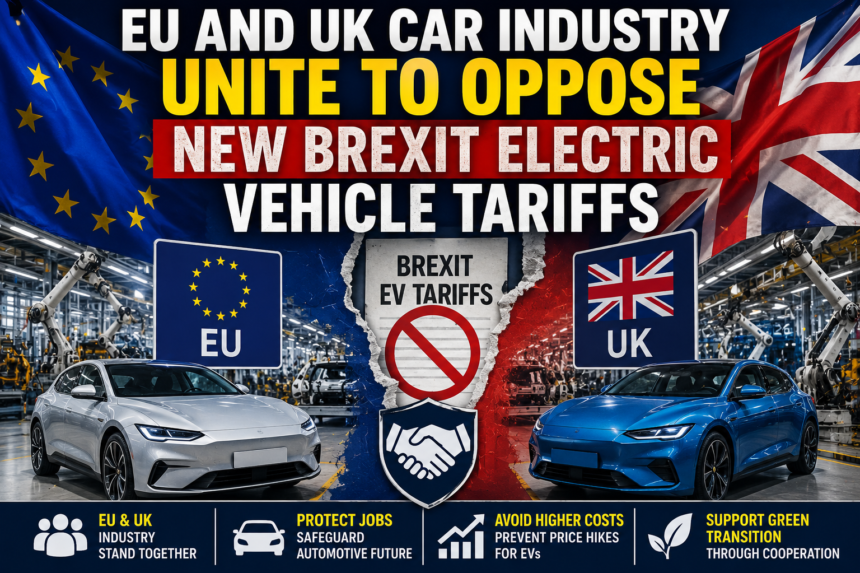
The European and British automotive industries are urging the EU to postpone post-Brexit tariffs on electric vehicles, warning the sector is not ready for the strict requirements for tariff-free trade. Industry leaders say imposing tariffs in 2027 could raise vehicle prices, slow EV sales, and hinder the shift to cleaner transport.
The issue revolves around the “Rules of Origin” provisions contained in the EU-UK Trade and Cooperation Agreement signed after Brexit. These rules determine how much of a vehicle and its battery must be manufactured within the UK or EU in order to qualify for tariff-free trade. If manufacturers fail to meet these thresholds from January 1, 2027, a 10% tariff could be imposed on electric vehicles traded between Britain and the European Union.
What Are the Brexit EV Tariffs?
When the UK left the European Union, both sides agreed on trade rules designed to encourage local manufacturing and reduce dependence on imported components.
Under the agreement, electric vehicles must meet strict local-content requirements. By 2027:
- 55% of a vehicle’s value must originate in the UK or EU.
- Most battery cells and battery packs must be produced within Europe.
- Vehicles that fail to meet these conditions could face a 10% import tariff when traded across the Channel.
The original plan was intended to encourage investment in European battery factories and EV supply chains. However, industry leaders now say that reality has not matched those expectations.
Why Are Carmakers Asking for Another Delay?
Automobile manufacturers argue that the European battery industry has not developed quickly enough to satisfy the 2027 requirements.
According to industry groups, several factors have slowed progress:
- Supply-chain disruptions following the COVID-19 pandemic.
- Global semiconductor shortages.
- Rising manufacturing costs.
- Dependence on China for battery materials and processing.
- Delays in establishing large-scale battery production facilities across Europe.
Industry representatives say that despite significant investments in European battery manufacturing, domestic production still falls short of what is needed to meet the stricter rules.
Mike Hawes, Chief Executive of the UK’s Society of Motor Manufacturers and Traders (SMMT), stated that battery supply chains remain unprepared for the planned requirements and called for a pragmatic solution that avoids harming EV adoption.
The Challenge of Battery Production
Battery production has become one of the most important strategic industries in the world.
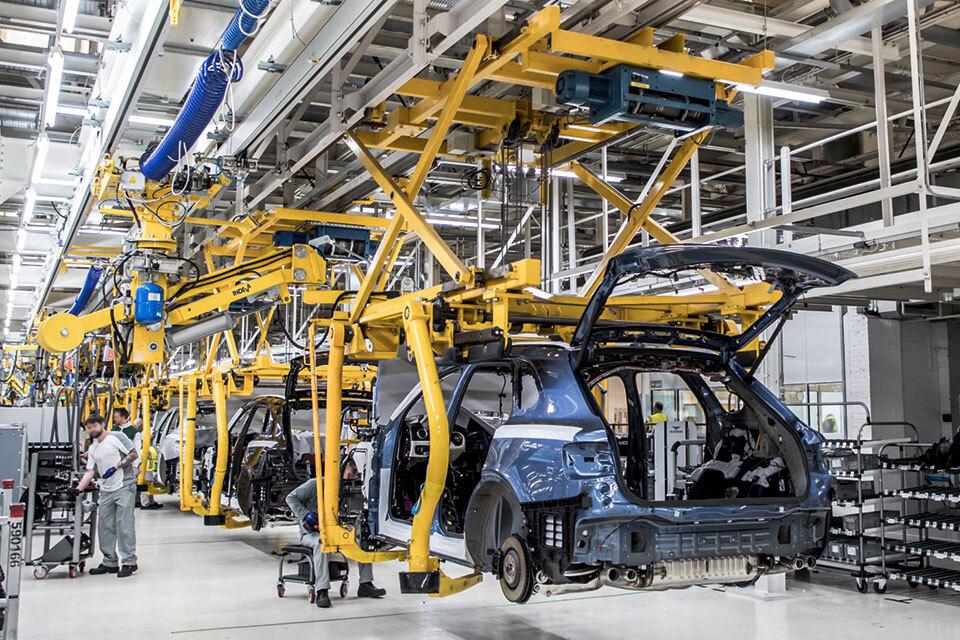
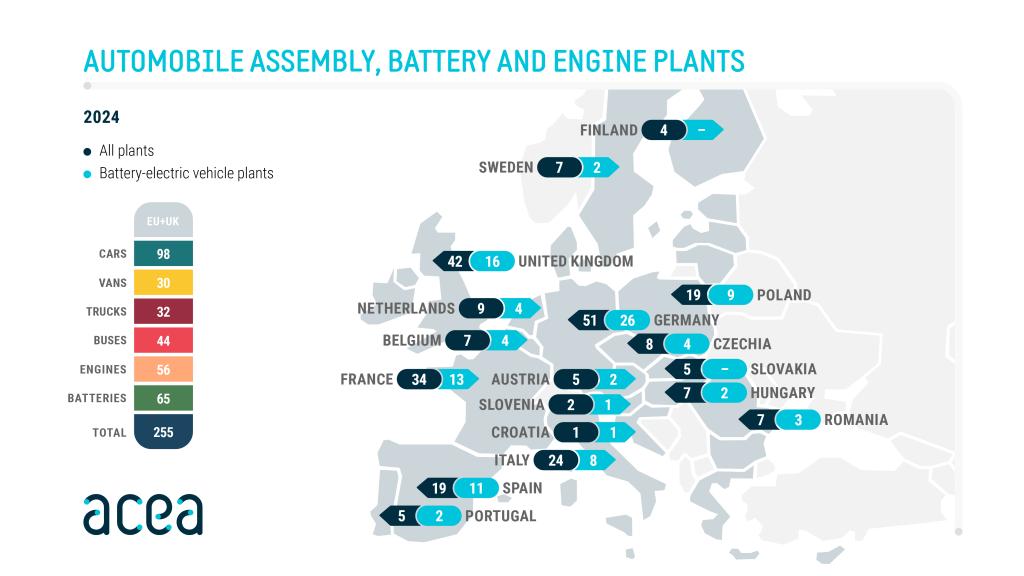
Although Europe has invested billions of euros in battery manufacturing projects, industry experts estimate that only a relatively small share of batteries used in European electric vehicles will be fully produced within Europe by 2027. The automotive sector remains heavily dependent on Chinese suppliers for lithium processing, battery cells, and critical raw materials.
China currently dominates much of the global EV battery supply chain, giving Chinese manufacturers a major competitive advantage.
European manufacturers argue that building a fully independent battery ecosystem requires more time, capital, and infrastructure than originally anticipated.
Potential Impact on Consumers
If the tariffs are implemented without another extension, industry analysts warn that consumers could ultimately bear the cost.
Possible consequences include:
🚗 Higher EV Prices
A 10% tariff could significantly increase the cost of electric vehicles traded between the UK and the EU.
📉 Lower EV Demand
Higher prices could discourage consumers from purchasing electric vehicles.
🏭 Reduced Production
Manufacturers may scale back production or delay investments in new EV models.
🌱 Slower Green Transition
Reduced EV sales could make it more difficult for Europe to achieve its climate goals and reduce emissions.
Industry groups argue that imposing tariffs on electric vehicles would be counterproductive at a time when governments are encouraging consumers to switch away from petrol and diesel cars.
Industry Leaders Unite
One notable aspect of the debate is the rare unity between British and European car manufacturers.
Companies and industry associations on both sides of the Channel have consistently argued that the current deadlines are unrealistic. Similar concerns were raised in 2023, leading to an agreement that postponed the tariffs until the end of 2026.
Now, as the deadline approaches once again, the industry is pressing for a second extension.
Manufacturers believe that additional time would allow battery factories currently under construction to begin production and strengthen local supply chains.
The European Commission’s Position
The European Commission has acknowledged the industry’s concerns and remains in discussions with stakeholders.
However, officials have not yet committed to granting another extension. The Commission maintains that the original rules were designed to encourage domestic investment and reduce strategic dependence on foreign suppliers.
European policymakers face a difficult balancing act:
- Supporting domestic manufacturing.
- Protecting jobs.
- Promoting electric vehicle adoption.
- Reducing dependence on China.
- Maintaining strong trade relations with the UK.
The issue is expected to feature prominently in upcoming EU policy discussions and trade negotiations.
Brexit, China, and Global Competition
The debate over EV tariffs is occurring against a backdrop of increasing global competition.
European automakers face pressure from:
- Rapidly expanding Chinese EV manufacturers.
- Lower-cost battery production in Asia.
- Rising energy costs in Europe.
- Tight environmental regulations.
Many industry leaders argue that adding Brexit-related tariffs at this stage could further weaken the competitiveness of European manufacturers in the global market.
At the same time, policymakers are trying to protect European industries from unfair competition while building a stronger local EV ecosystem.
Economic and Employment Concerns
The automotive sector remains one of Europe’s largest employers.
Millions of jobs across the UK and EU depend directly or indirectly on vehicle manufacturing, component production, logistics, and related services.
Industry associations warn that tariffs could:
- Increase production costs.
- Reduce exports.
- Discourage investment.
- Put manufacturing jobs at risk.
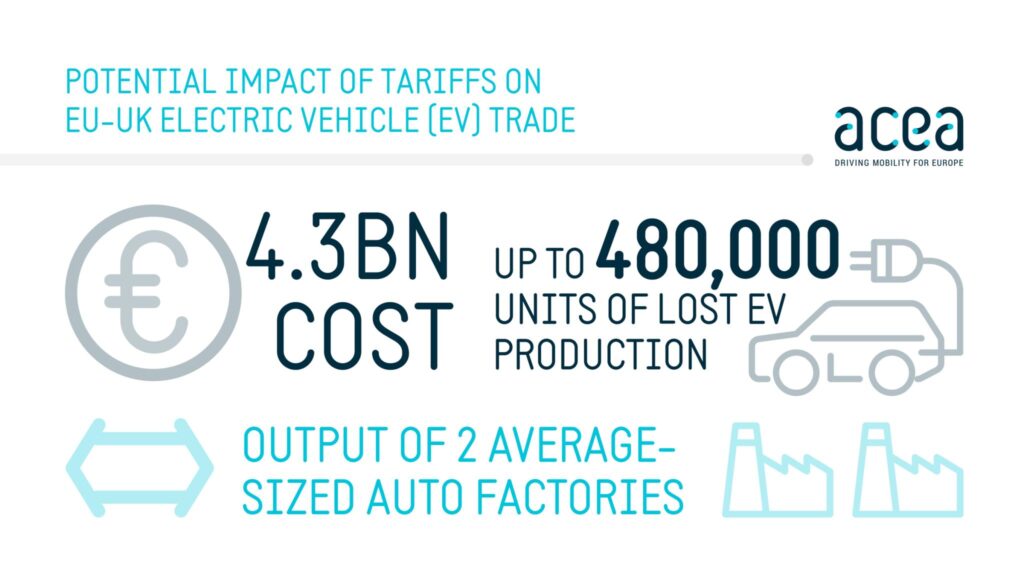
Some estimates suggest that billions of euros in additional costs could be imposed on manufacturers if the rules take effect without modification.
What Happens Next?

The coming months will be critical.
European leaders are expected to review the issue as part of broader discussions on industrial policy, trade competitiveness, and strategic economic security. Carmakers hope that policymakers will approve another temporary extension while the battery sector continues to develop.
Whether Brussels grants that request remains uncertain, but both industry leaders and governments recognize the importance of avoiding disruptions to the growing EV market.
Conclusion
In summary, the central argument from the automotive industry is that delaying the Brexit-related EV tariffs is essential because the sector cannot currently meet the 2027 requirements. While these rules aim to boost European battery production and supply chains, industry leaders argue that immediate enforcement would harm competitiveness, slow EV adoption, and undermine climate and economic objectives. Policymakers face the challenge of weighing these arguments in a rapidly evolving market.