

India Auto Industry 2025 – Surge, Strain & Strategic Shift
The Indian auto industry in 2025 is at a crossroads. On one hand, production and exports are hitting new highs; on the other, deep-seated disruptions are forcing manufacturers to rethink supply chains and technology strategies. For those watching the sector closely—not just from the showroom floor but from boardrooms and investor decks—the mix of opportunity and challenge is potent.
Table of Contents
- Production & Export Momentum
- Key Disruptors & Risk Factors
- Electric Vehicles (EVs) & the India Opportunity
- Technological Leap: Connected Cars & Smart Mobility
- Policy Landscape & Strategic Initiative
- Outlook: Winners, Losers & What to Watch
- FAQs
1. Production & Export Momentum
According to industry data, the Indian auto industry in 2025 produced over 310 lakh units across cars, CVs, two-wheeler, and quadricycles in FY25, with June alone clocking ~24 lakh units—a 17 % growth over June 2023. India Brand Equity Foundation+1
Exports are also surging: Passenger vehicle exports in Q1 2025-26 (April-June) exceeded 2.04 lakh units—a growth of 13.2% year-on-yearSiamam.in
However, not all segments are equal. In August 2025, while overall production was up ~8.1% compared to August 2024, small cars and sedan sales continued to decline domestically, even as two-wheelers and exports held up. India Today
What this means: Demand is shifting. More buyers are gravitating towards SUVs, lifestyle vehicles, and exports. Entry-level vehicle volumes are under pressure.
2. Key Disruptors & Risk Factors
The Indian auto industry 2in 025 is facing multi-layered disruptions. Finnovate+1
- Rare-earth supply constraints: For example, Maruti Suzuki cut production targets for its maiden EV e-Vitara due to rare-earth magnet shortages driven by Chinese export curbs. Reuters
- Global tariff and trade pressures: U.S. import duties and geopolitical tensions are raising costs for Indian OEMs and component exporters. Finnovate
- Technology transition cost: Shifting from ICE to EV, plus integrating connected-car technologies, is capital-intensive and time-sensitive.
- Changing consumer behaviour: Small car segments are under stress; scooters and UVs are holding ground, but growth is uneven. India Today+1
3. Electric Vehicles (EVs) & the India Opportunity
Electric mobility is a key driver in the Indian auto industry by 2025. According to the latest figures, India’s EV industry is projected to touch ₹20 lakh crore (~US$234 billion) by 2030. India Brand Equity Foundation+1
Major investment announcements are underway. For instance, Japanese-based Suzuki Motor Corporation is investing US$8 billion in India, with production of its first EV, the e-Vitara, for both domestic and export markets. Reuters
But India’s auto industry 2025 also reveals the gap: Maruti’s near-term EV production was scaled back dramatically to 8,200 units for H1 due to supply constraints, even as annual targets remain intact. Reuters
Key takeaway: EVs are central—but the path is bumpy. Supply chain resilience, localisation of battery materials, and charging infrastructure will separate winners from stragglers.
4. Technological Leap: Connected Cars & Smart Mobility
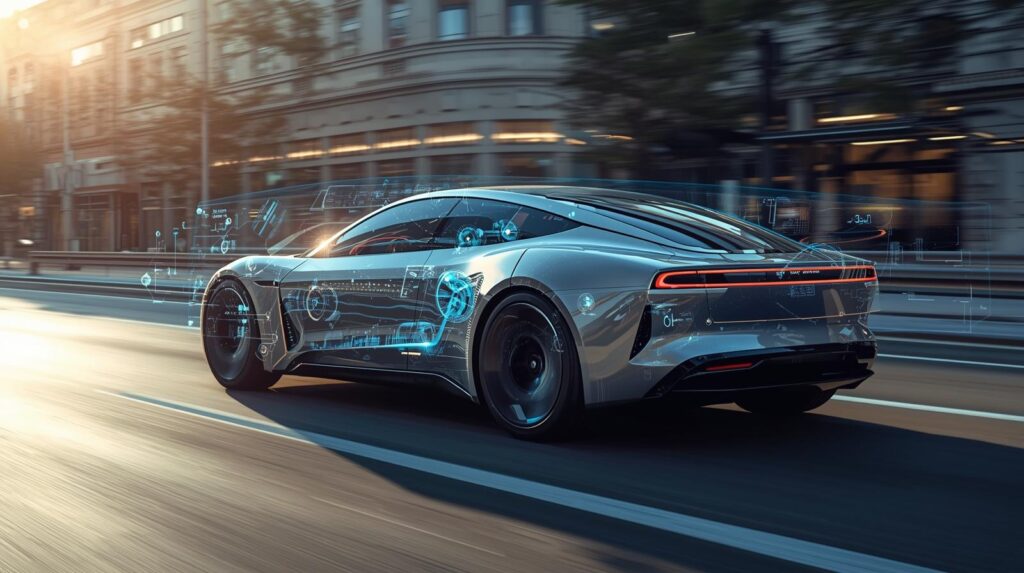
India’s auto industry 2025 is not just about more cars—it’s about smarter ones. The adoption of advanced features like ADAS (Advanced Driver Assistance Systems), in-car connectivity, AI, vehicle-to-everything (V2X) communication, and cloud integration is picking up apace, KPMG
An example: tech-giant Qualcomm’s “Snapdragon Auto Day” in India showcased how automakers can leverage its platforms for cockpit AI, car-to-cloud services, and connected mobility solutions. Indiatimes
For Indian OEMs and suppliers, the message is clear: go from “mechanical manufacturer” to “mobility systems company”.
5. Policy Landscape & Strategic Initiative
The Indian auto industry 2025 is also deeply shaped by government programmes. Under the Automotive Mission Plan 2047 (AMP 2047), the government has set phased milestones for 2030, 2037nd 2047 in partnership with industry experts and academia. The Economic Times
In addition:
- PLI (Production Linked Incentive) schemes for EVs, ACC-batteries, and auto components. Wikipedia
- GST reductions for EVs and incentives under the PM E-DRIVE scheme. India Brand Equity Foundation
Policy remains a double-edged sword: While incentives boost investment, complexity, localisation demands, and global material dependencies add risk.
6. Outlook: Winners, Losers & What to Watch
Winners likely in the Indian auto industry 2025:
- OEMs that move quickly into premium UVs and exports.
- EV players with localised battery supply chains.
- Tier-1 suppliers focusing on digital tech, connected features, res, and ADAS.
- Regions attracting investments (Tamil Nadu, Gujarat, etc).
Potential laggards:
- Small-car makers slow to shift.
- Manufacturers are unable to manage rare-earth/material bottlenecks.
- Firms dependent on legacy ICE export markets without EV transition.
What to watch now:
- How supply-chain pressures (rare-earth, freight, tariffs) are resolved.
- Speed of EV infrastructure roll-out, and cost competitiveness of EVs in India.
- Export destinations and the Indian auto industry 2025’s global role: localising for global markets will matter.
- How connected-car features and software define value rather than just hardware.
Conclusion
The Indian auto industry 2025 is a story of both momentum and transformation. Surging production and exports offer strong indicators of growth—but hidden beneath are structural shifts in technology, global supply chains, and policy. Automakers and suppliers who adapt fast—to EVs, smart mobility, and globalised manufacturing—stand to lead. Others may find themselves challenged by new-era demands.
FAQs (Focus Keyword: India auto industry 2025)
- What is the growth rate for the Indian auto industry in 2025?
Production in June 2025 reached ~24 lakh units, up 17% over June 2023. India Brand Equity Foundation - How are personal car sales performing?
In August 2025, the small-car and sedan segments saw declines; the SUV and two-wheeler segments held better. India Today - What’s the status of EVs in the Indian auto industry in 2025?
EV industry projected at ~₹20 lakh crore by 2030; major investments already announced. India Brand Equity Foundation+1 - What major supply-chain risk is troubling the industry in 2025?
Rare-earth material shortages, especially due to Chinese export controls, are affecting EV parts. Reuters - What export numbers are being seen?
Passenger vehicle exports in Q1 2025-26 were 2.04 lakh units, up 13.2% over last year. siam. in - How is policy shaping the sector in 2025?
AMP 2047isation, PLI scheme, a nd EV incentives are all active. The Economic Times - Are small cars dead in India as of 2025?
Not dead—but they’re under pressure, with customers shifting to SUVs and multiple incentives favouring other segments. India Today - What is connected mobility’s role this year?
Growing fast: connected-car solutions and platforms like Qualcomm’s Snapdragon Auto Day show the shift to software-latest vehicles. Indiatimes - Which region in India is seeing major auto investments?
States like Gujarat and Tamil Nadu are emerging hubs, with greenfield EV plants and export-oriented manufacturing. India Brand Equity Foundation - The Indian sustainable path?
It has the potential—but success will depend on managing disruptions (tech, supply-chain, policy) while shifting business models from volume to value.
Ola Shakti Launches Ola Electric’s Bold Leap into ₹1 Trillion BESS Market: What You Need to Know